Castles in Germany: 15 Fairytale Castles Worth the Trip
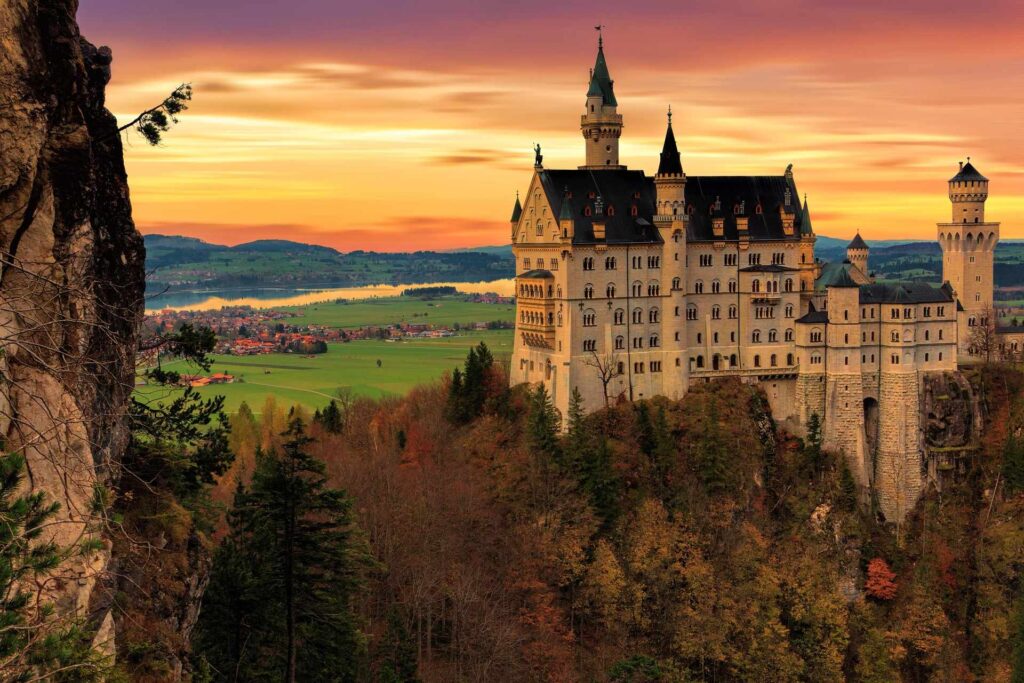
The first time I saw Neuschwanstein, it was through a gap in the trees on the steep walk up from Hohenschwangau village. One bend in the path, and there it was: white towers against dark pine forest. I actually stopped walking, and so did the family behind me.
That moment is why so many of us dream about castles in Germany. The country has thousands of them, from crumbling hilltop ruins to palaces dripping in gold. The hard part isn’t finding a castle. It’s choosing which ones are worth your time.
This guide makes that easier. I’ve grouped 15 of the best castles in Germany by region (in my opinion!), so you can plan real trips instead of zigzagging across the map. Southern Germany leads the list, because Bavaria and Baden-Württemberg have the highest concentration of fairytale castles. I’ve added four standouts from the rest of the country too.
For each castle, you’ll get what makes it special, a short note on its German architecture, how long to spend there and a practical ticket tip. Let’s start with a quick lesson that will make every castle visit more fun.
Burg, Schloss or Festung? What German Castle Names Really Mean
German has three different words for what English speakers just call a castle. Knowing them tells you what to expect before you even arrive.
A Burg is a fortified castle built for defense, usually in the Middle Ages. Think thick walls, towers, a gatehouse and a hilltop position. Burg Eltz and the Nuremberg Kaiserburg are classic examples.
A Schloss is a palace or stately home. It was built for comfort and to show off wealth, not to survive a siege. Linderhof and Herrenchiemsee are both Schlösser, and you’ll find ballrooms and gardens rather than arrow slits.
A Festung is a fortress built for military use, often with star-shaped walls for cannons. Some places blur the lines. Neuschwanstein is called a Schloss, but it was designed to look like a medieval Burg.
A Quick Guide to German Architecture Through Its Castles
German castles are like a timeline you can walk through. Each one shows the building style that was in fashion when it was built or rebuilt. Here are the five styles you’ll spot most often on this list.
Romanesque and Medieval (11th–13th Century)
Romanesque buildings have thick walls, round arches and small windows. They feel heavy and solid, because staying safe mattered more than looking pretty. The Wartburg’s great hall is one of the best-preserved Romanesque palaces in Germany, and Nuremberg’s Kaiserburg shows the same tough medieval spirit.
Gothic (13th–15th Century)
Gothic architecture reaches upward. Look for pointed arches, taller towers and more decoration. Burg Eltz, with its cluster of spiky towers and half-timbered upper floors, is a great example of late-medieval Gothic building.
Renaissance (16th Century)
In the Renaissance, castles started to show off. Facades filled with statues, columns and careful symmetry. Heidelberg Castle’s Ottheinrich Building is one of the most important early Renaissance buildings in Germany, even as a roofless ruin.
Baroque and Rococo (17th–18th Century)
Baroque is big, bold and dramatic. Rococo is its lighter, more playful cousin with pastel colors, curly gold stucco and lots of mirrors. Linderhof and Herrenchiemsee were built much later, but Ludwig II copied this style on purpose to honor French kings.
19th-Century Romantic Revival (Historicism)
Here’s the fun surprise. Many of the most “medieval-looking” castles in Germany are actually from the 1800s. Neuschwanstein, Hohenzollern, Lichtenstein and Cochem were all built or rebuilt in that century to look like knights’ castles from a storybook.
This style is called Historicism. Architects borrowed from older styles and mixed them with modern comforts. Neuschwanstein, for example, had running water and central heating from the start.
Bavaria’s Fairytale Castles
If you only have time for one region, make it Bavaria. It has the castles most people picture when they think of Germany, plus some hidden gems that most lists skip.
1. Neuschwanstein Castle
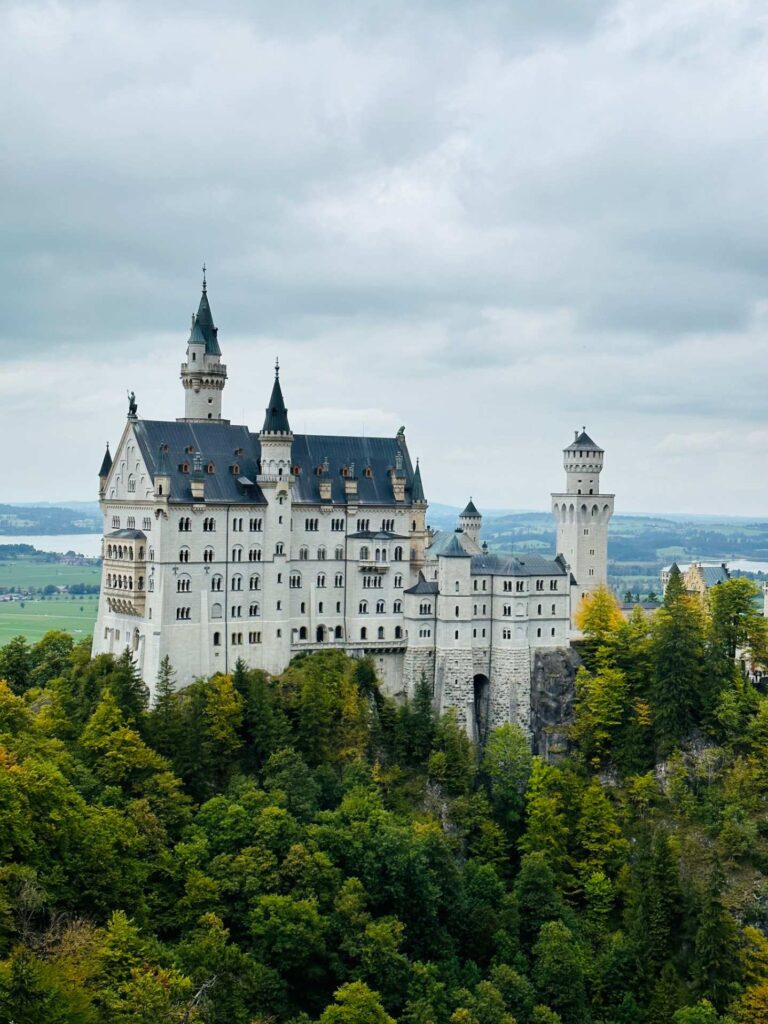
Neuschwanstein is the most famous of all castles in Germany, and it really does live up to the photos. King Ludwig II started building it in 1869 as a private retreat. He wanted a castle that looked like the knights’ tales and Wagner operas he loved.
Here’s the sad twist. Ludwig spent only a few months living in it, and he died in 1886 before it was finished. The castle opened to visitors just weeks after his death, and it’s been busy ever since.
In July 2025, Neuschwanstein joined UNESCO’s World Heritage List along with Linderhof, Herrenchiemsee and the King’s House on Schachen (UNESCO / German Foreign Office). That has only made it more popular.
Architecture: Romantic Revival with Romanesque details. The Throne Hall looks like a church, with a golden apse and a huge chandelier shaped like a crown.
Don’t miss: The view from Marienbrücke (Mary’s Bridge), a footbridge over a gorge behind the castle. It’s the spot for that classic photo. Check before you go, because it sometimes closes for repairs or in icy weather.
Practical info: The guided tour inside lasts about 30 minutes, but plan half a day for the whole visit. The walk up from the village takes 30 to 40 minutes, or you can take a shuttle bus or horse carriage most of the way. Book tickets online in advance on the official ticket shop. Same-day tickets at the Hohenschwangau Ticket Centre often sell out early in the morning.
2. Hohenschwangau Castle
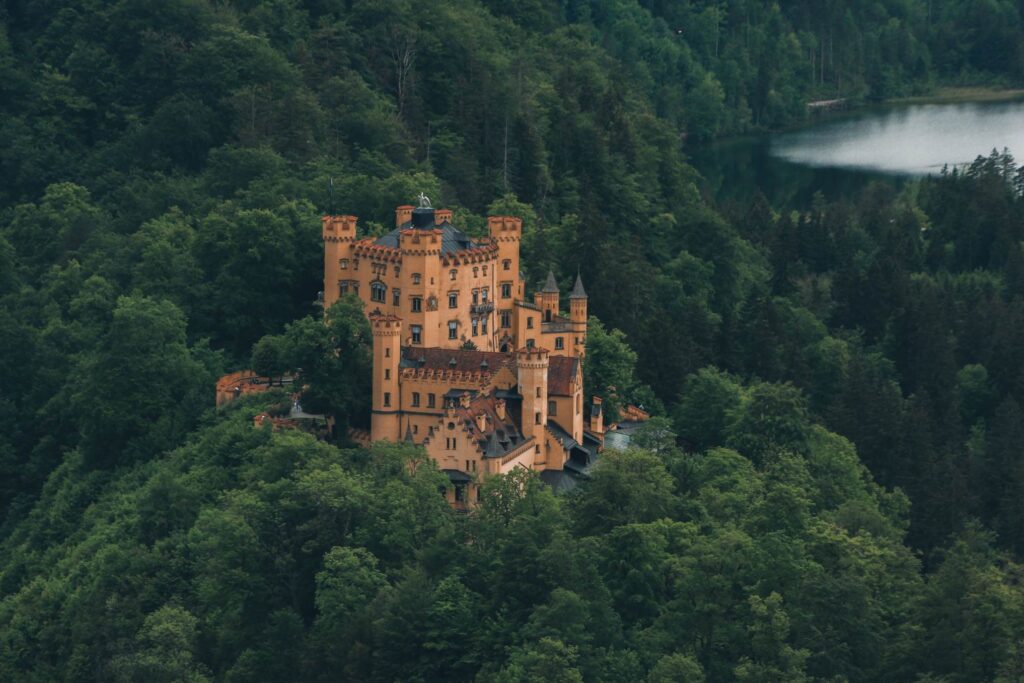
Hohenschwangau sits across the valley from Neuschwanstein, and many visitors walk right past it. That’s a mistake. This yellow castle is where Ludwig II spent his childhood summers.
His father, King Maximilian II, rebuilt the ruined medieval castle in the 1830s. The rooms are full of painted scenes from German legends, and you can see how they shaped young Ludwig’s imagination.
Architecture: Neo-Gothic, one of the earliest Romantic Revival castles in Bavaria.
Practical info: Plan about 1.5 hours. Hohenschwangau is run separately from the state palaces, so it’s not included in the Bavarian palace passes. Book a time slot for both castles on the same day, with at least two hours in between.
3. Linderhof Palace
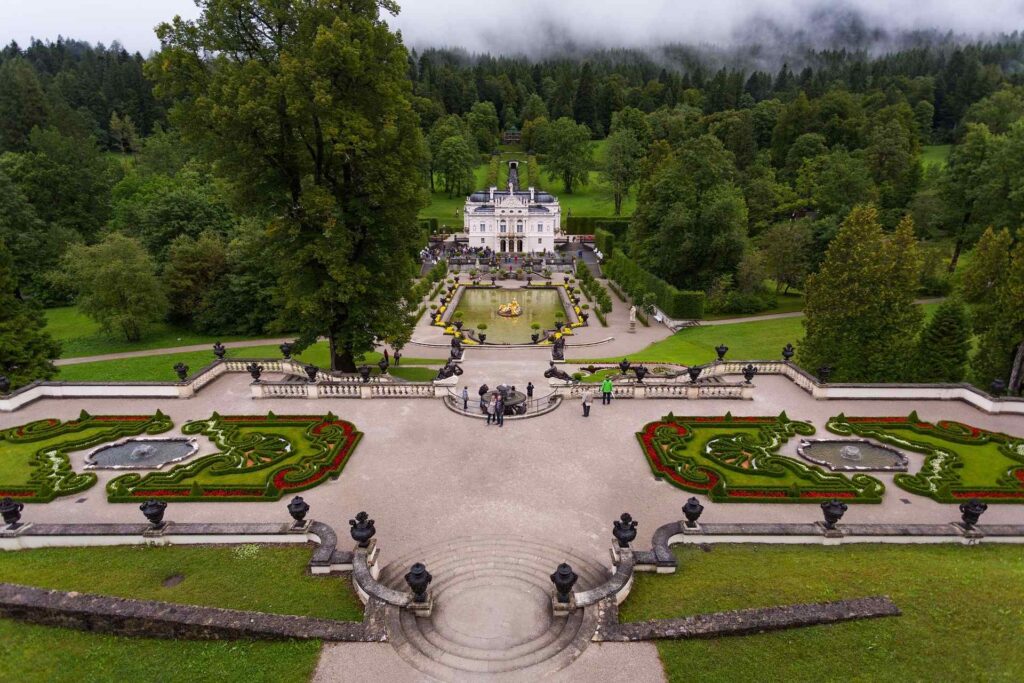
Linderhof is the smallest of Ludwig’s palaces, and it was my favorite. It’s the only one he saw finished, and he lived here more than anywhere else. It feels like a jewelry box hidden in a quiet Alpine valley.
Inside, every room shines with gold, mirrors and silk. Outside, the gardens have fountains, terraces and odd little buildings. The most famous is the Venus Grotto, a fake cave built so Ludwig could watch Wagner scenes from a boat.
Architecture: Rococo-style, inspired by French royal palaces.
Practical info: Plan two to three hours, including the gardens. Some garden buildings close in winter, so visit between April and mid-October to see everything. It’s about 1.5 hours by car from Munich.
4. Herrenchiemsee Palace
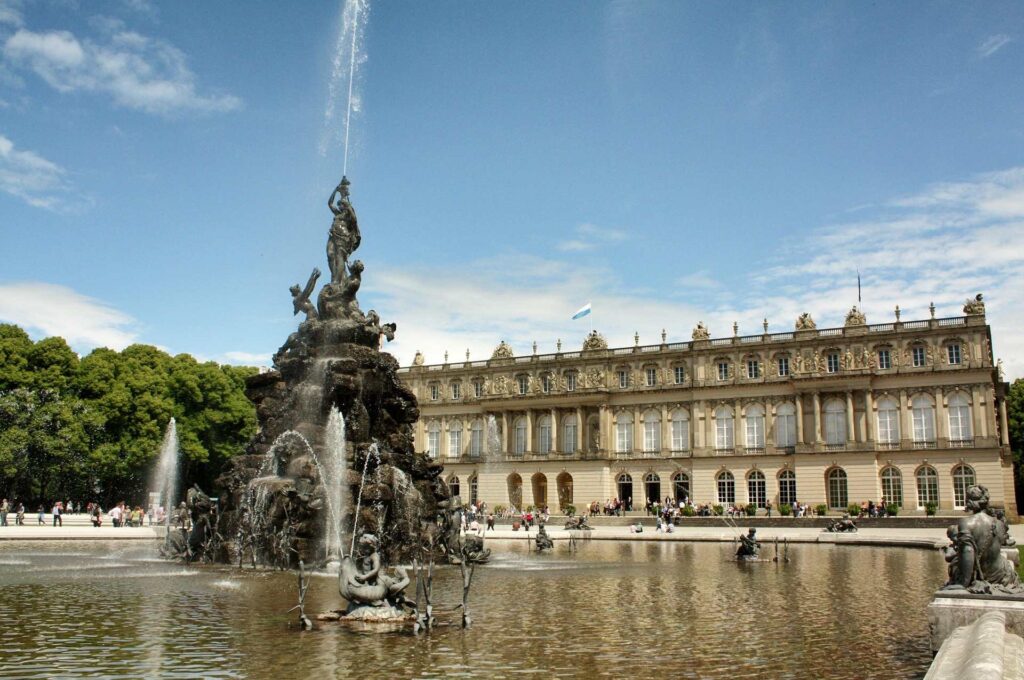
Herrenchiemsee is Ludwig’s tribute to Versailles, built on an island in Lake Chiemsee. Getting there is half the fun. You take a boat from Prien am Chiemsee, then walk or ride a carriage through the woods to the palace.
The highlight is the Great Hall of Mirrors. At 98 meters long, it’s even longer than the one at Versailles, and it has 33 glass chandeliers (Herrenchiemsee official site). Ludwig ran out of money, so many rooms were never finished. Seeing the bare brick next to the gold is surprisingly moving.
Architecture: Neo-Baroque, modeled on Versailles.
Practical info: Plan most of a day, including the boat. The ticket also covers the King Ludwig II Museum in the palace.
5. Nuremberg Imperial Castle (Kaiserburg)
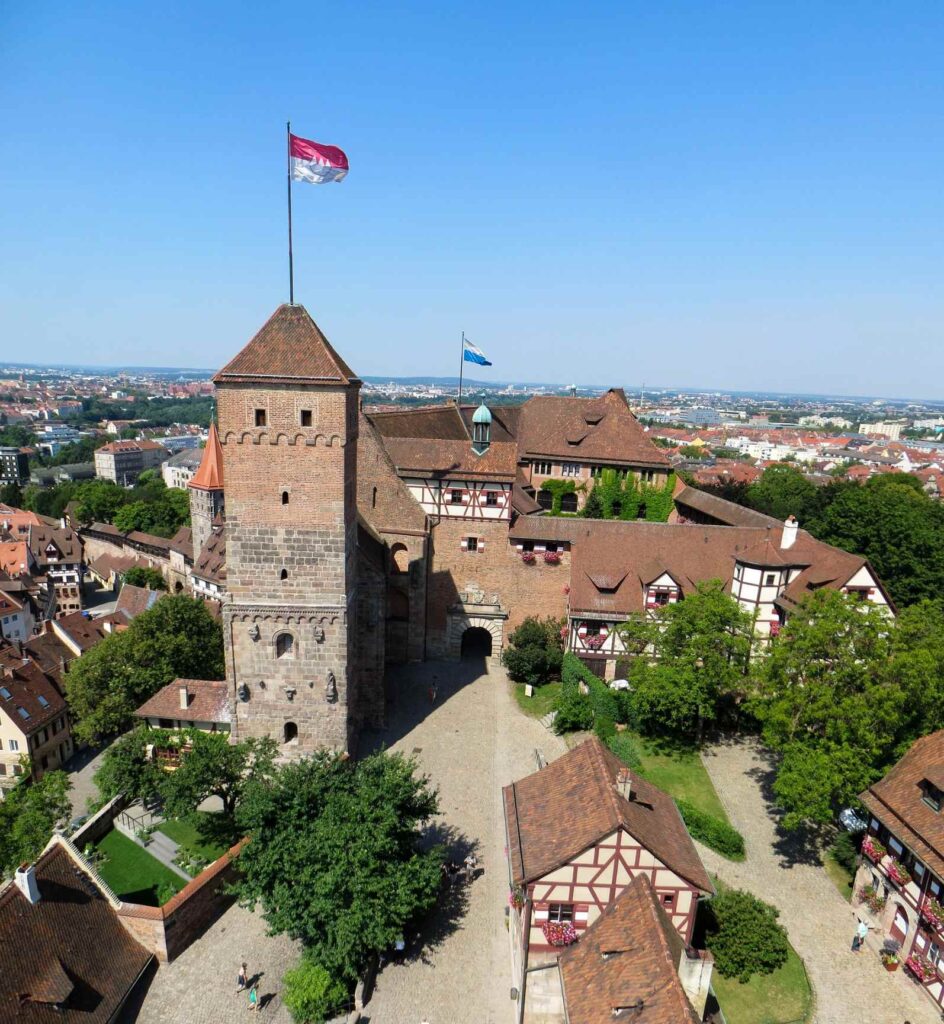
Nuremberg’s Kaiserburg was one of the most important castles of the Holy Roman Empire. Emperors stayed here for centuries, and it watches over one of Germany’s most charming old towns.
This is a real medieval Burg, not a romantic copy. Climb the Sinwell Tower for views over red rooftops. Then peer down the Deep Well, carved straight into the rock.
Architecture: Romanesque and Gothic, with heavy sandstone walls.
Practical info: Plan two hours. It’s a short uphill walk from Nuremberg’s main square, so it’s easy to pair with a day exploring the old town.
6. Burghausen Castle
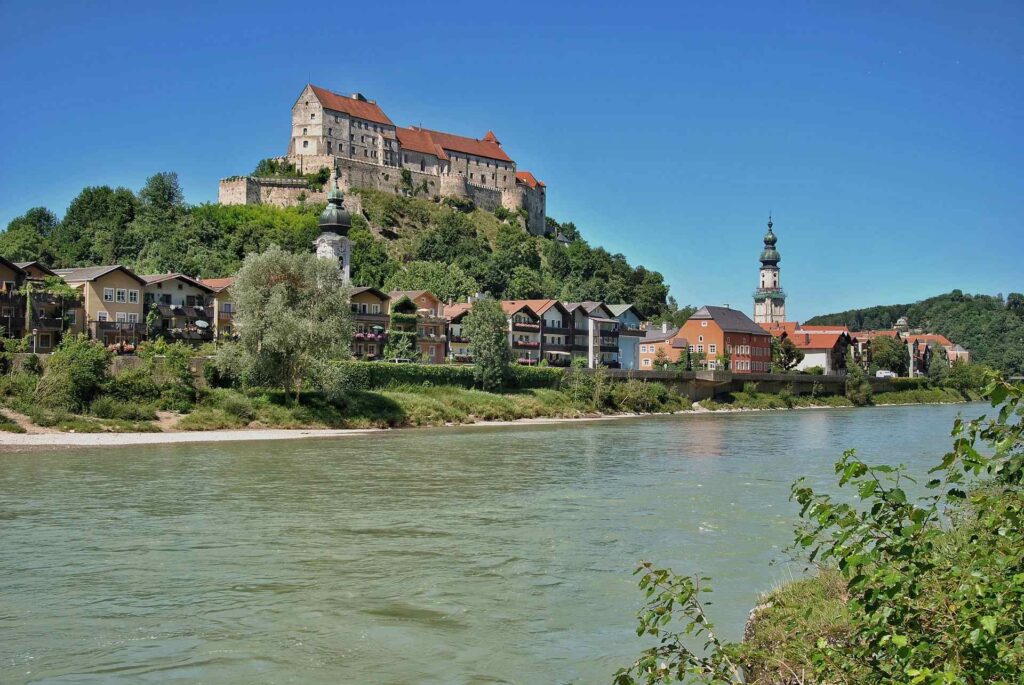
This is the hidden gem I recommend most. Burghausen Castle stretches 1,051 meters along a ridge above the Salzach River, and Guinness World Records lists it as the longest castle in the world (Wikipedia).
It’s made up of a main castle and five outer courtyards. Walking from one end to the other feels like moving through a small medieval town. Look across the river and you’re looking at Austria.
Architecture: Gothic, mostly from the 15th century.
Practical info: Plan two to three hours. Walking the grounds is free, and you pay only for the museums. It’s about 1.5 hours east of Munich by car.
7. Harburg Castle
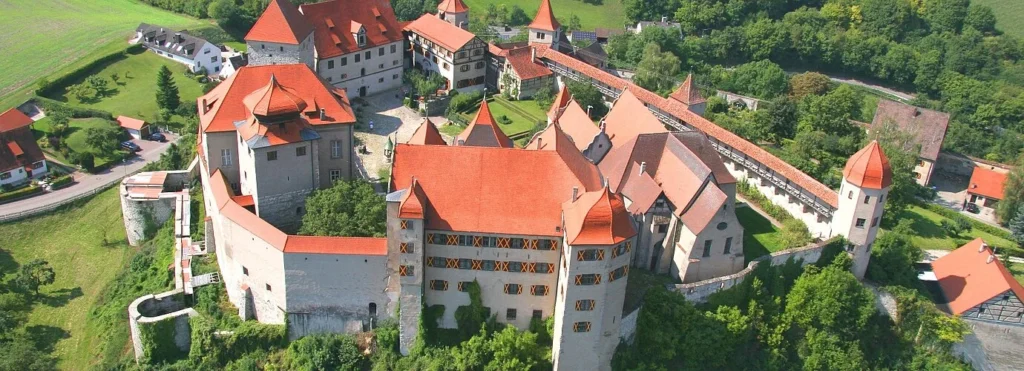
Harburg is one of the oldest and best-preserved medieval castles in southern Germany. It was never destroyed, so the walls, towers and walkways look much like they did centuries ago.
It sits right on the Romantic Road, close to the round walled town of Nördlingen. If you’re driving the route, it’s an easy and rewarding stop. My Romantic Road Germany guide has more ideas for the drive.
Architecture: Romanesque and Gothic fortifications.
Practical info: Plan 1.5 hours. The inside is seen on a guided tour, so check the castle’s website for English tour times before you go.
Money-Saving Tip: Bavarian Palace Passes
If you’re visiting several Bavarian castles, look at the passes from the Bavarian Palace Administration. The 14-day ticket costs €40 per person, or €80 for a family or two partners. It covers more than 40 state sights, including Neuschwanstein, Linderhof, Herrenchiemsee, Nuremberg’s Kaiserburg, Burghausen and Munich’s Residenz (Bavarian Palace Administration).
There’s a catch. You still need to book a free time slot for Neuschwanstein, and Hohenschwangau isn’t included at all. If you only want Ludwig’s three palaces, the cheaper “King’s Castles” combination ticket may be better value. Children under 18 get in free at the state palaces, but they still need a booked ticket.
Castles in Baden-Württemberg
Baden-Württemberg, Bavaria’s neighbor to the west, gets less attention from tourists. That’s good news for you. Its castles are just as dramatic, and the crowds are usually smaller.
8. Hohenzollern Castle
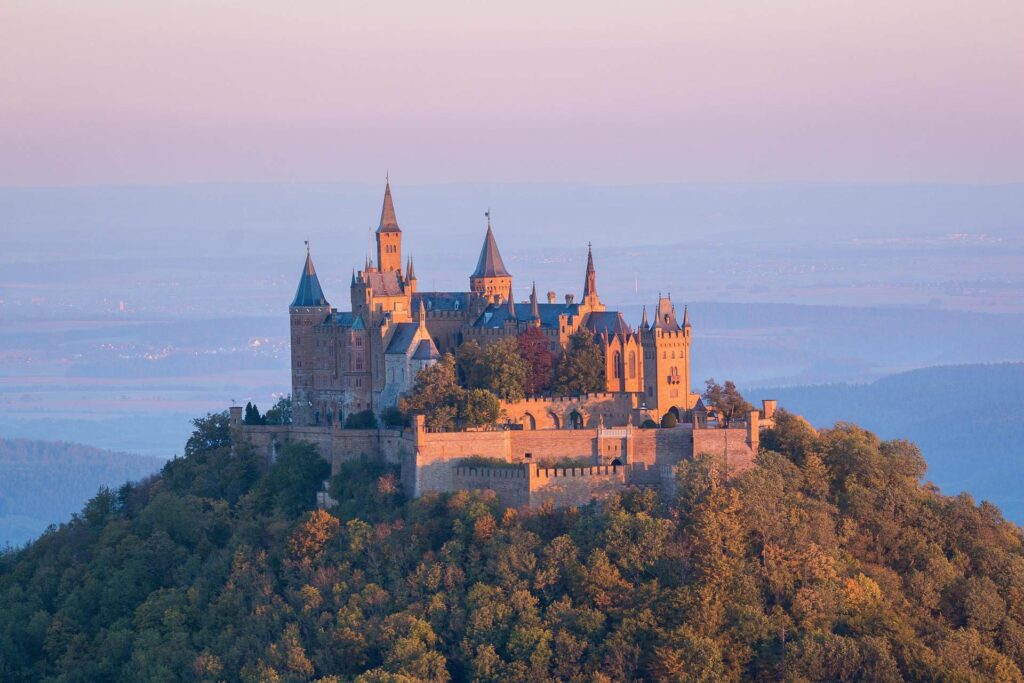
Hohenzollern Castle sits on top of a cone-shaped mountain 855 meters high. On misty mornings, it seems to float above the clouds. It’s one of the most photographed castles in Germany, and seeing it in person explains why.
This is the ancestral home of the Hohenzollern family, who later became kings of Prussia and German emperors. The castle you see today was built between 1850 and 1867, designed by architect Friedrich August Stüler (Wikipedia). The family still owns it.
Architecture: Neo-Gothic, with towers, battlements and a winding ramp up to the gate.
Don’t miss: The treasury, which holds the crown of Prussia’s last king, Wilhelm II. For the best photo, drive to the Zeller Horn viewpoint nearby.
Practical info: Plan 2.5 to 3 hours. A shuttle bus runs from the parking lot to the top, or you can walk up in about 20 minutes. It’s about an hour south of Stuttgart.
9. Heidelberg Castle
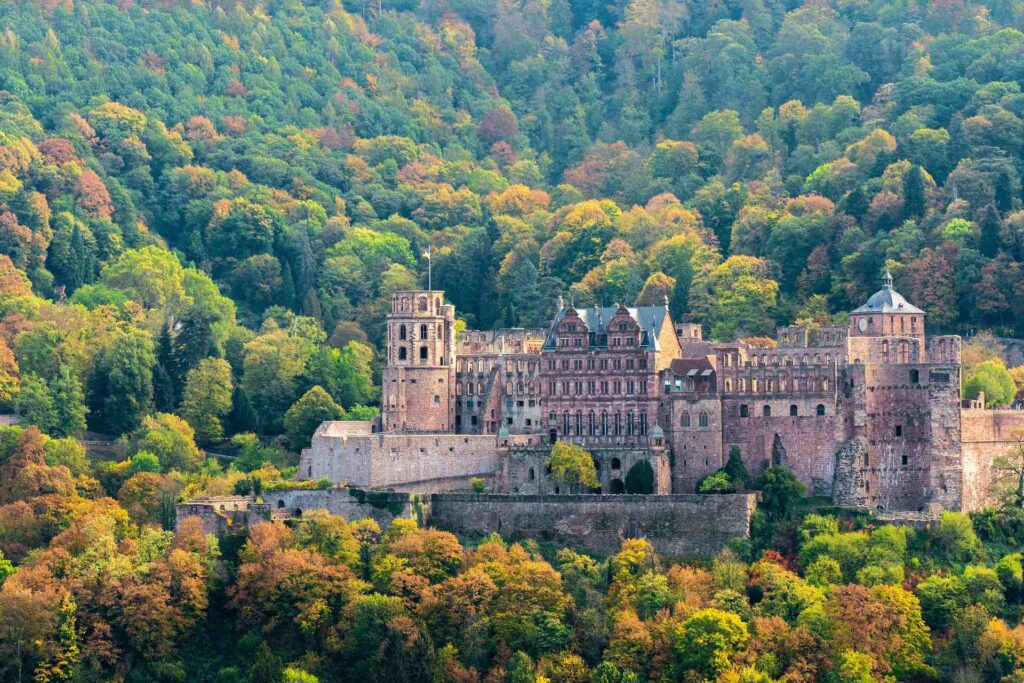
Heidelberg Castle is proof that a ruin can be more beautiful than a perfect building. Its red sandstone walls rise above the old town and the Neckar River. The view from the castle terrace is one of the best in Germany.
French troops blew up much of the castle in 1689 and 1693. A lightning strike in 1764 did more damage, and the castle was never fully rebuilt. In the 1800s, writers and painters fell in love with the ruins, and they became a symbol of German Romanticism.
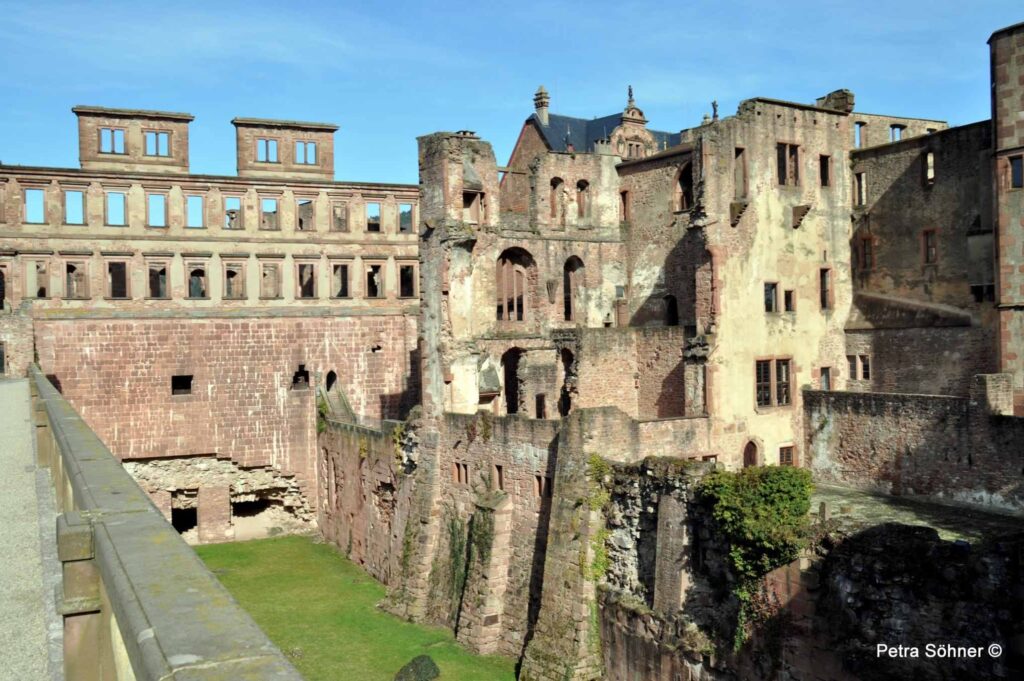
Architecture: Gothic and Renaissance. The facade of the Ottheinrich Building is covered in statues of heroes and gods.
Don’t miss: The Heidelberg Tun, a giant wine barrel in the cellar that holds about 220,000 liters. Afterward, cross the river and walk the Philosophers’ Walk for the classic view back at the castle.
Practical info: Plan two to three hours. Take the funicular railway up from the old town to save your legs.
10. Lichtenstein Castle
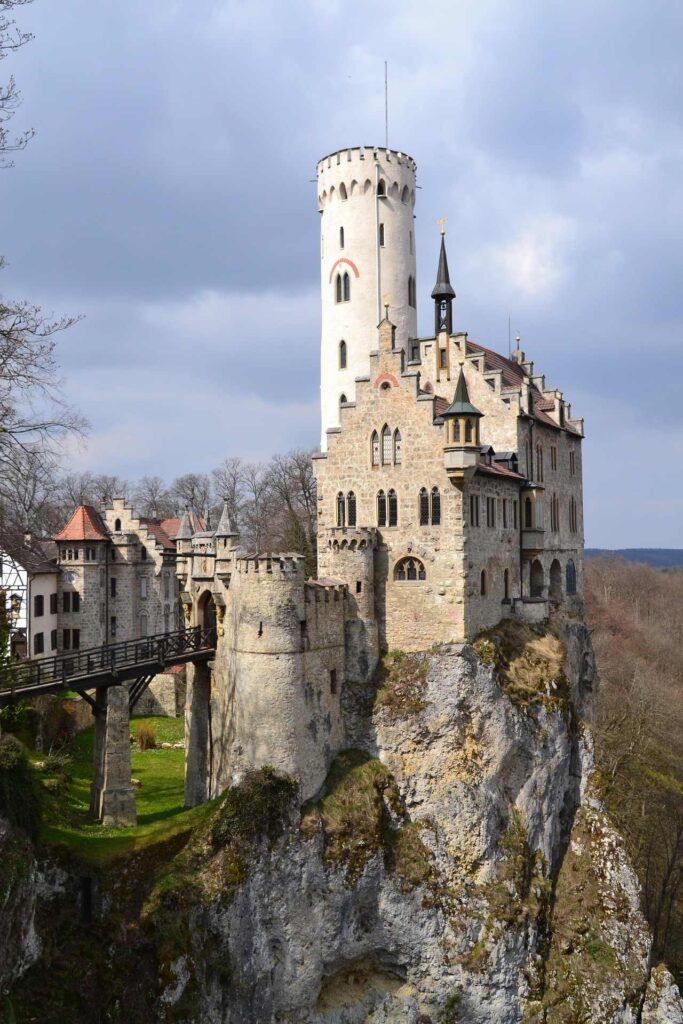
Lichtenstein Castle looks like it was built for a storybook, and in a way it was. It stands on the edge of a steep cliff, about 250 meters above the valley below. It’s small, but the setting is unforgettable.
The castle was built from 1840 to 1842. It was inspired by Lichtenstein, an 1826 novel by Wilhelm Hauff (Wikipedia). It still belongs to the Dukes of Urach today.
Architecture: Romantic Revival, Neo-Gothic.
Practical info: Plan 1.5 hours. The courtyard and grounds are quick to see, and the inside is shown on short guided tours. Pair it with Hohenzollern for a perfect day on the Swabian Alb.
11. Meersburg Castle (Altes Schloss)
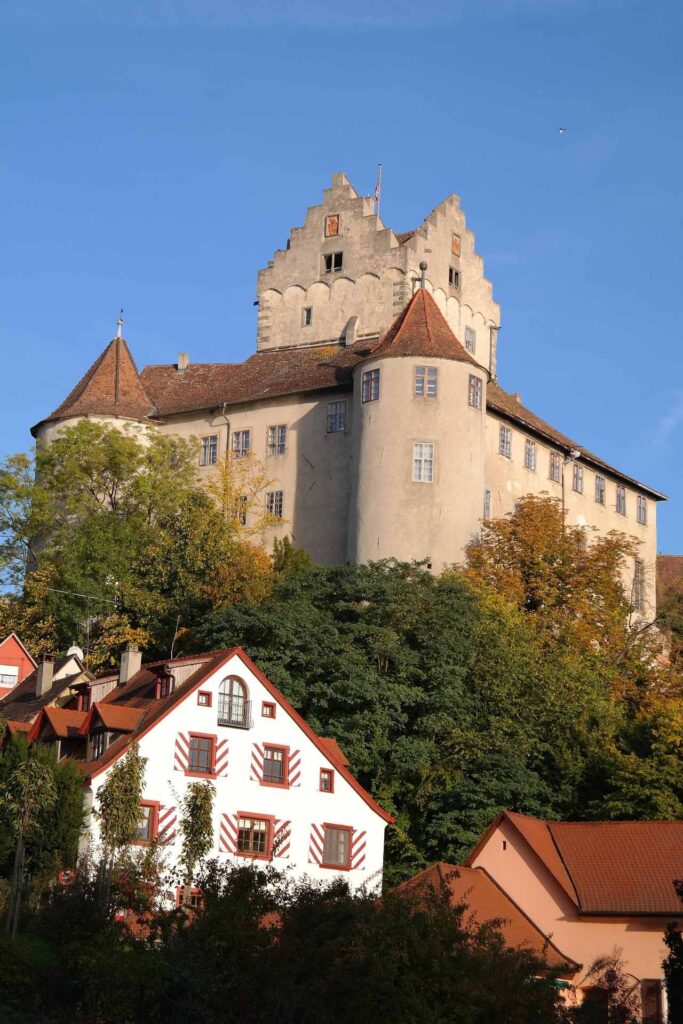
Meersburg Castle overlooks Lake Constance, with the Swiss Alps on the horizon on clear days. It’s described as one of the oldest inhabited castles in Germany. Part of it is still a family home.
The oldest tower may date back to the 7th century, though historians still debate this. The poet Annette von Droste-Hülshoff lived here in her final years, and you can visit her rooms.
Architecture: Medieval, with later additions over the centuries.
Practical info: Plan 1.5 to 2 hours. Visits are self-guided, which is great if you like exploring at your own pace. Spend the rest of the day in Meersburg’s pretty lakeside old town.
Fairytale Castles Beyond the South
Southern Germany has the biggest names, but some of the most magical castles in Germany are further north. These four are worth a special trip.
12. Burg Eltz
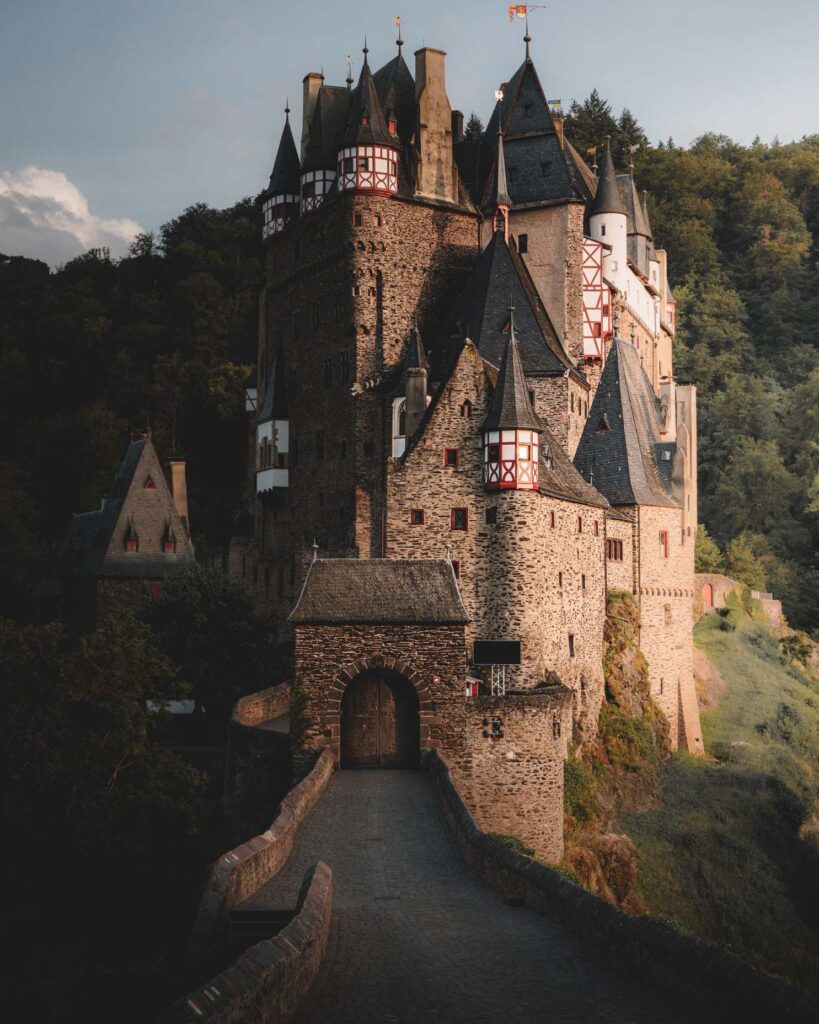
Burg Eltz might be the most perfect medieval castle in Germany. It sits deep in a forested valley near the Moselle River, and you only see it once you’re almost there. That first glimpse through the trees felt like stepping into a fairytale.
The same family has owned Eltz for more than 850 years, or 33 generations (Atlas Obscura). Thanks to clever diplomacy and its hidden location, it survived wars that destroyed most castles in the region. The original furniture and art are still inside.
Architecture: Late-medieval Gothic, with eight towers and half-timbered upper floors.
Practical info: The castle is open from April to early November only. Plan three hours, including the walk down from the parking lot or the longer forest hike from the village of Moselkern. Go early in the morning to beat the tour buses.
13. Reichsburg Cochem
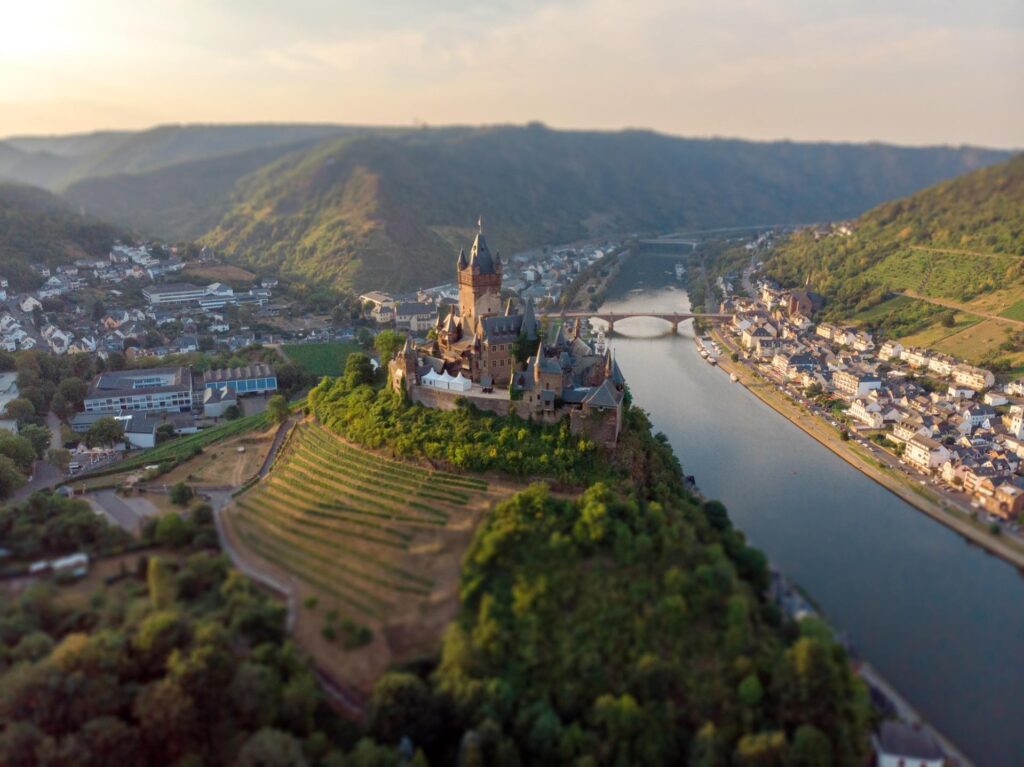
Reichsburg Cochem rises above the Moselle River and a town full of half-timbered houses and wine taverns. It’s one of the easiest castles in Germany to combine with a relaxed wine-country weekend.
The first castle here dates to around the year 1000. French troops blew it up in 1689, and it lay in ruins for nearly 180 years. In 1868, Berlin businessman Louis Ravené bought the ruins and rebuilt them as a summer home (Reichsburg Cochem). The town of Cochem has owned it since 1978.
Architecture: Neo-Gothic, with rooms decorated in Romanesque, Gothic and Renaissance styles.
Practical info: Plan 1.5 hours for the castle, plus time to wander the town. It’s a steep 15-minute walk up from Cochem’s center.
14. Wartburg Castle
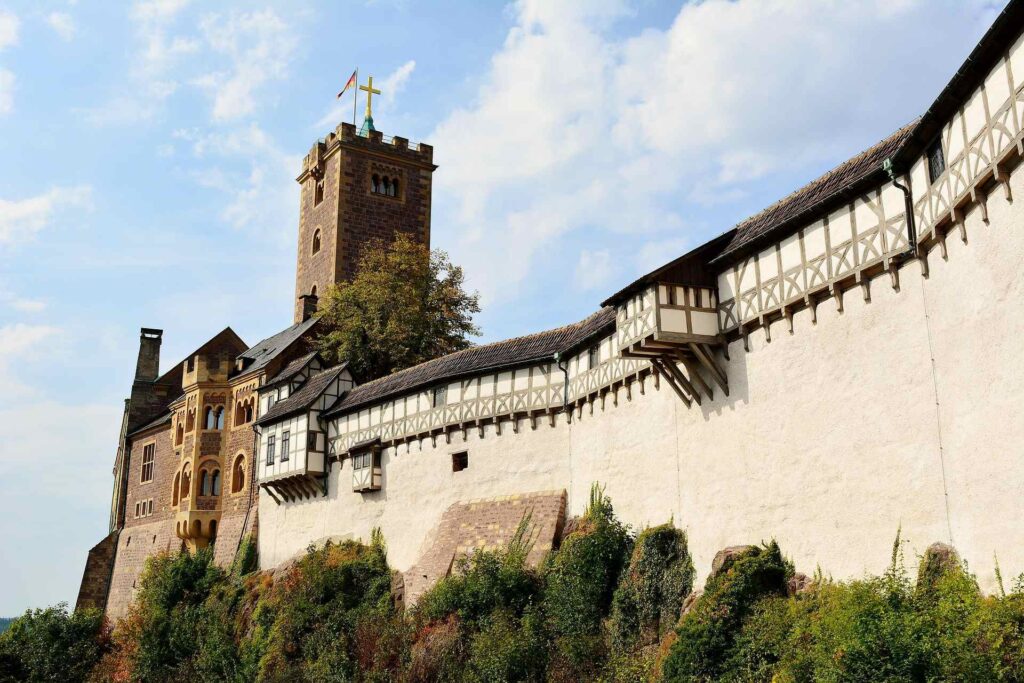
The Wartburg in Thuringia is packed with history. Martin Luther hid here in 1521 and 1522, and he translated the New Testament into German during his stay. You can still visit the simple room where he worked.
The Wartburg is also a UNESCO World Heritage Site. It’s a must for anyone interested in German history, not just castles.
Architecture: Its Romanesque great hall dates from the 12th century and is one of the finest of its kind in Germany. Many other parts were restored in the 1800s.
Practical info: Plan 2.5 hours. It sits on a hill above the town of Eisenach, which has good train connections.
15. Schwerin Castle
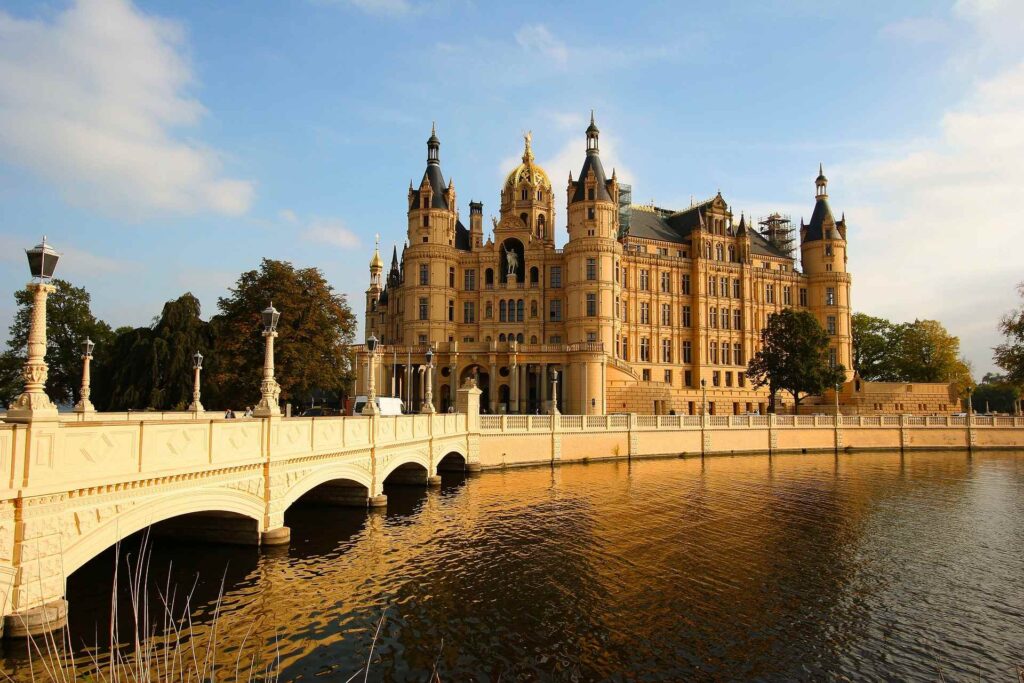
Schwerin Castle sits on its own island in a lake, with golden domes and towers reflected in the water. It looks more like a French château than a German fortress. It’s my pick for the most underrated castle in Germany.
In July 2024, the Schwerin Residence Ensemble, which includes the castle and more than 30 other buildings and gardens, became a UNESCO World Heritage Site (UNESCO / German Foreign Office). Today, part of the castle is home to the state parliament of Mecklenburg-Western Pomerania.
Architecture: Historicism, mixing Neo-Renaissance, Neo-Gothic and Neo-Baroque styles.
Practical info: Plan half a day for the castle museum and the gardens. Schwerin is about two hours by train from Berlin or one hour from Hamburg.
How to Combine Castles in Germany on a Road Trip
The easiest way to see several castles is to group them by area. Here are four routes that work well, each built around castles from this list.
Ludwig’s Castles Loop from Munich (2–3 Days)
Start with Herrenchiemsee, about an hour east of Munich. Then head southwest to Linderhof, and finish with Neuschwanstein and Hohenschwangau near Füssen. Spending a night in Füssen or Schwangau lets you reach Neuschwanstein before the day-trip crowds arrive.
The Romantic Road and Nuremberg (2–3 Days)
Drive the Romantic Road north from Füssen and stop at Harburg along the way. Add a detour to Nuremberg for the Kaiserburg and the old town. My Romantic Road Germany guide covers the towns in between.
Swabian Alb Day Trip from Stuttgart (1 Day)
Hohenzollern and Lichtenstein are only about 40 minutes apart. Visit Hohenzollern in the morning and Lichtenstein in the afternoon. You’ll need a car for this one, as public transport is slow.
Moselle Castle Weekend (2 Days)
Base yourself in Cochem and visit the Reichsburg on day one. On day two, drive or take the train to Moselkern and hike to Burg Eltz. Finish with a wine tasting back on the river.
FAQs About Castles in Germany
What is the most famous castle in Germany?
Neuschwanstein Castle in Bavaria is the most famous castle in Germany. King Ludwig II began building it in 1869, and it now welcomes huge numbers of visitors every year. Since 2025, it has been part of a UNESCO World Heritage Site with Ludwig’s other palaces.
How many castles are there in Germany?
There’s no exact count, because it depends on whether you include ruins and smaller manor houses. Most estimates say Germany has more than 20,000 castles and palaces. Many are ruins, but hundreds are open to visitors.
Which German castle inspired a famous fairytale castle?
Neuschwanstein is widely said to have inspired the fairytale castle in a famous animated film and its theme parks. Its white towers and mountain setting became the model for the storybook castle many of us grew up with.
What is the oldest castle in Germany?
It’s hard to name just one, since many castles were rebuilt over the centuries. Meersburg Castle on Lake Constance is often described as one of the oldest inhabited castles in Germany, with a tower that may date to the 7th century.
Which part of Germany has the most castles?
Bavaria has the most famous palaces, including all of Ludwig II’s. The Rhine and Moselle valleys in Rhineland-Palatinate also have a very high number of castles packed close together, especially along the Middle Rhine.
Final Thoughts on the Best Castles in Germany
There’s something special about walking through a castle gate and imagining who walked there before you. Whether it’s a king’s dream palace or a knight’s hilltop fortress, castles in Germany bring history to life in a way few places can.
If it’s your first trip, I’d start with Neuschwanstein and Linderhof to see Ludwig’s world at its most magical. Then add one hidden gem, like Burghausen or Burg Eltz, for a quieter and more surprising experience. Along the way, you’ll see centuries of German architecture, from Romanesque walls to rococo mirrors.
Ready to start planning? Read my Romantic Road Germany guide to link several castles into one unforgettable road trip.