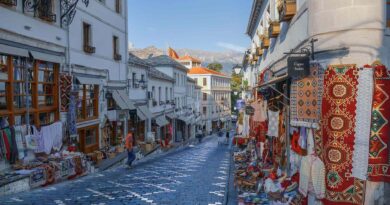
Romantic Road Germany: A Complete Guide to Europe’s Most Fairytale Route
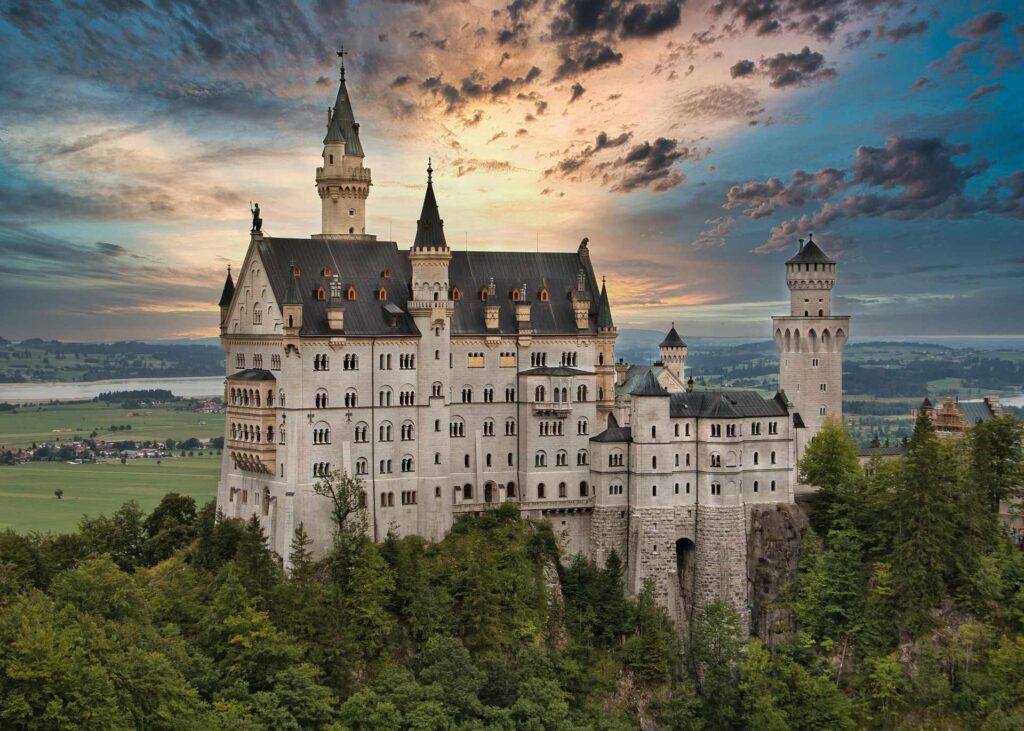
A road trip where every town looks like it belongs in a storybook. Half-timbered houses lean over cobblestone streets. Castle turrets poke out above the trees. That road is real, and it’s called the Romantic Road Germany.
In German, it’s known as the Romantische Straße. It stretches from the wine country near Würzburg all the way down to the Alps near Füssen. Along the way, you’ll pass medieval walled towns, fairytale castles, and some of the prettiest countryside in Bavaria.
This guide covers everything you need to plan your own Romantic Road itinerary. We’ll walk through the best towns to stop in, the castles worth your time, how to get around, and where to eat and sleep. By the end, you’ll know exactly how to plan your own trip down this route.
What Is the Romantic Road, and Where Does It Go?
The Route at a Glance
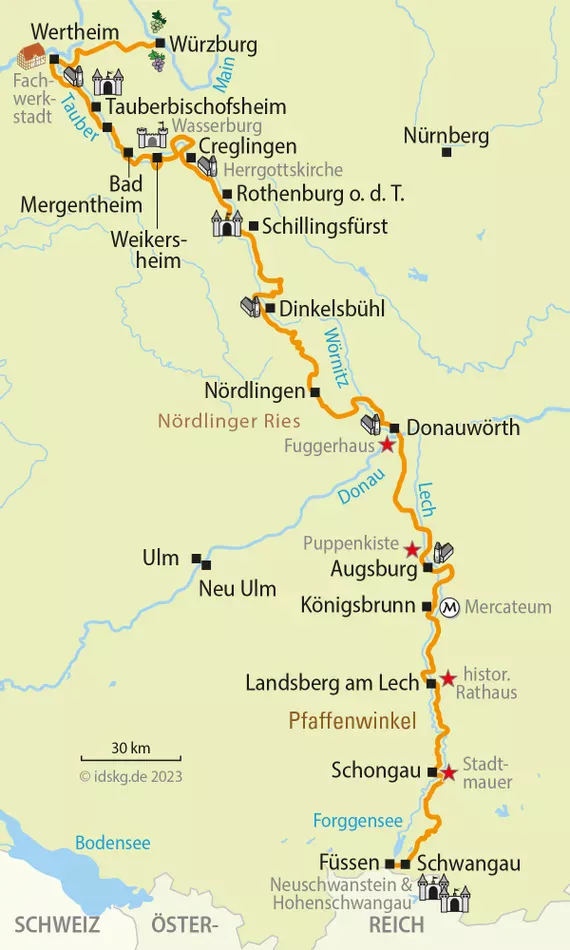
The Romantic Road runs for about 350 to 460 kilometers, depending on which sources you check and exactly which roads you follow. That’s roughly 220 to 290 miles. It starts in Würzburg, in the region of Franconia, and ends in Füssen, right at the base of the Bavarian Alps.
The route passes through two German states along the way. Most of it runs through Bavaria, with a smaller stretch through Baden-Württemberg. You won’t drive on a single highway the whole time. Instead, the Romantic Road links together a series of smaller roads that connect town to town.
Where the Name “Romantic Road” (Romantische Straße) Comes From
The name doesn’t come from candlelit dinners or couples holding hands. It was chosen in the 1950s by tourism promoters in Augsburg, who wanted a name that captured the dreamy, storybook feeling of the medieval towns and countryside along the route. It’s marketing language more than anything historical.
Germany actually has a separate, unrelated route called the Romanesque Road, or Straße der Romanik, up in Saxony-Anhalt. It’s named for the Romanesque architecture style found in its churches and cathedrals, but it’s hundreds of miles away and has nothing to do with the Romantic Road in Bavaria. It’s an easy mix-up, but the two routes don’t overlap at all.
A Quick Bit of History
The Romantic Road isn’t an ancient trade route, even though it feels like one. It was created in 1950, just a few years after World War II ended. Local tourism boards strung together existing roads and historic towns to give travelers a reason to explore southern Germany.
The plan worked better than anyone expected. Today, the route draws around five million overnight visitors a year, according to figures tied to the region’s own tourism board. Day-trippers push that number even higher, making it one of Germany’s biggest draws for international travelers.
When to Visit the Romantic Road, Germany
Best Months for Good Weather and Fewer Crowds
Late spring and early fall are the sweet spot for this trip. May, June, September, and early October give you mild weather without the peak summer crowds. The towns are still lively, but you won’t be shoulder to shoulder with tour groups at every castle gate.
July and August bring the warmest weather and the longest days. They also bring the biggest crowds, especially at Neuschwanstein Castle. If you can shift your trip even a few weeks outside of summer, you’ll notice a real difference in how relaxed the towns feel.
Visiting During Christmas Market Season
The Romantic Road turns into something special in late November and December. Towns like Rothenburg ob der Tauber are famous for their Christmas markets, with wooden stalls, mulled wine, and lights strung across old town squares. Rothenburg’s market is one of Germany’s best known and draws visitors from all over Europe.
Winter travel does come with trade-offs, though. Some smaller castles and attractions cut their hours or close for the season. Roads can also get icy in the mountains near Füssen, so a winter road trip takes a bit more planning than a summer one.
What to Expect Season by Season
Spring brings blooming countryside and comfortable driving temperatures, usually somewhere in the 50s and 60s Fahrenheit. Summer is warm, sometimes hot, and this is when every parking lot near Neuschwanstein fills up early. Fall brings golden colors across the vineyards near Würzburg and cooler, crisper air the further south you travel.
Winter is quiet outside of the holiday season, with some businesses in smaller towns closing for weeks at a time. If you’re chasing snow-covered castle photos, January and February can deliver that, but you’ll want to check road conditions before you go. No matter the season, layers are your friend, since Bavaria’s weather can shift quickly.
How to Travel the Romantic Road (Car, Train, or Tour)
Self-Driving the Romantic Road
If you’ve done a French Riviera road trip, you already know how much better Europe feels from behind the wheel.
Renting a car gives you the most freedom, and it’s how most travelers experience this route. You can stop wherever catches your eye, linger longer in towns you love, and skip the ones that don’t interest you. German roads are well maintained, and the Romantic Road’s official tourism site even offers downloadable route maps to help with planning.
Driving does require a bit of confidence on unfamiliar roads, and some town centers restrict car access to protect their historic streets. Parking is usually available just outside the old town walls, with a short walk in from there. If you’ve never driven in Europe before, this route is a gentle, well-signed place to start.
Doing the Romantic Road by Train and Bus
You don’t need a car to see this route, which surprises a lot of first-time visitors. Germany’s regional trains connect many of the bigger towns, including Würzburg, Augsburg, and Füssen. From those hub towns, local buses fill in the gaps to smaller stops like Rothenburg ob der Tauber and Dinkelsbühl.
Train and bus travel takes more planning than driving does, since schedules can be limited on weekends. It works best if you’re comfortable checking timetables ahead and building some flexibility into your days. This option is also easier on your budget, since you skip car rental and fuel costs entirely.
Guided Bus Tours Along the Route
If planning logistics isn’t your idea of a good time, a guided tour handles all of it for you. Several companies run multi-day bus tours along the Romantic Road, often starting in Frankfurt or Munich. These tours usually include a local guide, hotel stays, and stops at the major highlights like Neuschwanstein and Rothenburg.
Day tours are also common, especially from Munich, for travelers who only have one day to spare. These trips typically focus on Neuschwanstein Castle and maybe one nearby town. They’re a solid option if the rest of your trip is centered elsewhere in Germany.
Cycling the Romantic Road
For a slower, more active way to see the route, cycling is worth considering. A dedicated cycling path runs alongside much of the Romantic Road, and it’s popular enough that many hotels along the way are set up to handle cyclists and their gear. You can ride the whole route over several days or pick a shorter stretch, like the wine country near Würzburg.
The terrain is mostly gentle, with some hillier sections as you get closer to the Alps near Füssen. Bike rental shops and luggage transfer services operate in many towns along the route, so you don’t have to carry everything yourself. This is a great option if you want to slow down and really notice the countryside instead of driving past it.
The Best Romantic Road Germany Itinerary (3, 5, and 7 Days)
3-Day Romantic Road Itinerary
With three days, you’ll want to focus on the highlights instead of trying to see everything. Start in Würzburg and spend your first afternoon exploring the Residenz palace and the old town. Drive to Rothenburg ob der Tauber that evening, since it’s one of the best places to stay overnight on the whole route.
Spend your second day wandering Rothenburg’s walls and towers, then continue south toward Füssen in the afternoon. Use your third day for Neuschwanstein and Hohenschwangau castles before heading back or continuing your trip elsewhere in Bavaria. This pace is fast, but it hits the two biggest draws on the route.
5-Day Romantic Road Itinerary
Five days lets you slow down and add in some of the smaller towns that often get skipped. Spend your first day and night in Würzburg, then move to Rothenburg ob der Tauber for a full day and overnight stay. From there, add a stop in Dinkelsbühl or Nördlingen on your way south, since both towns are easy to reach and worth a few hours each.
Spend your fourth day working your way toward Füssen, with a stop in Augsburg if you have time. Save your last day for the castles near Füssen, giving yourself enough time to actually enjoy Neuschwanstein instead of rushing through it. This is the pace most travelers end up wishing they’d chosen.
7-Day Romantic Road Itinerary
A full week is where this trip really opens up. You’ll have time for two nights in Würzburg’s wine region, a relaxed two days in and around Rothenburg ob der Tauber, and a proper visit to both Dinkelsbühl and Nördlingen instead of picking just one. That still leaves two or three days near Füssen for castles, hiking, and maybe a day trip into the Alps.
This pace also gives you room for the things that don’t show up in a typical itinerary. You can linger over a long lunch, take a wrong turn on purpose, or add a detour to a lake or a smaller village you noticed on the map. Seven days turns this from a highlight reel into an actual vacation.
How Long You Actually Need
If you’re working with a long weekend, treat it like one of these weekend getaways in Europe rather than trying to do the whole route.
If you only have a weekend, focus on Rothenburg ob der Tauber and Neuschwanstein Castle and skip the rest. Three days is enough to feel like you’ve experienced the route without rushing constantly. Five to seven days is the range most travelers say they wish they’d booked, especially if you enjoy small towns as much as big landmarks.
The Best Towns and Stops Along the Romantic Road
Würzburg: Where the Route Begins
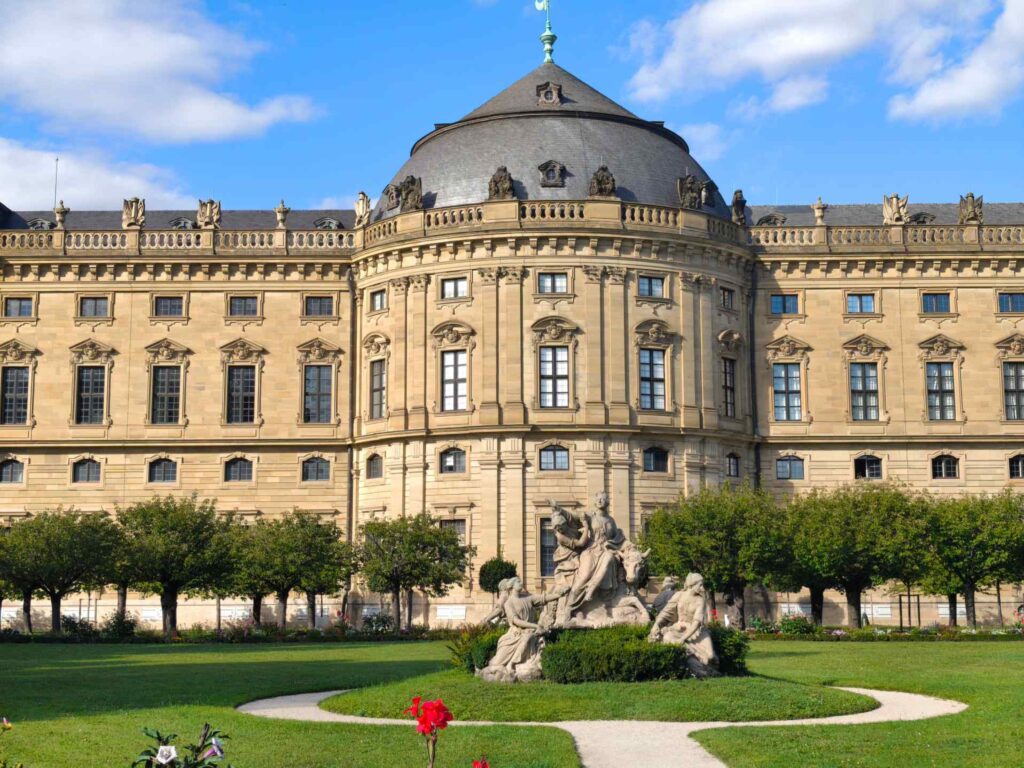
Würzburg sits in wine country, and that shapes almost everything about a visit here. The Würzburg Residenz, a UNESCO World Heritage Site, is the star attraction, with a jaw-dropping ceiling fresco painted by Giovanni Battista Tiepolo. You can read more about its history on UNESCO’s official listing.
Beyond the Residenz, Würzburg’s old town is easy to explore on foot, with vineyards climbing the hillside just above the city. It’s a gentler introduction to the route than the more touristy stops further south. Give yourself at least one overnight here if your schedule allows it.
Rothenburg ob der Tauber: The Postcard Medieval Town
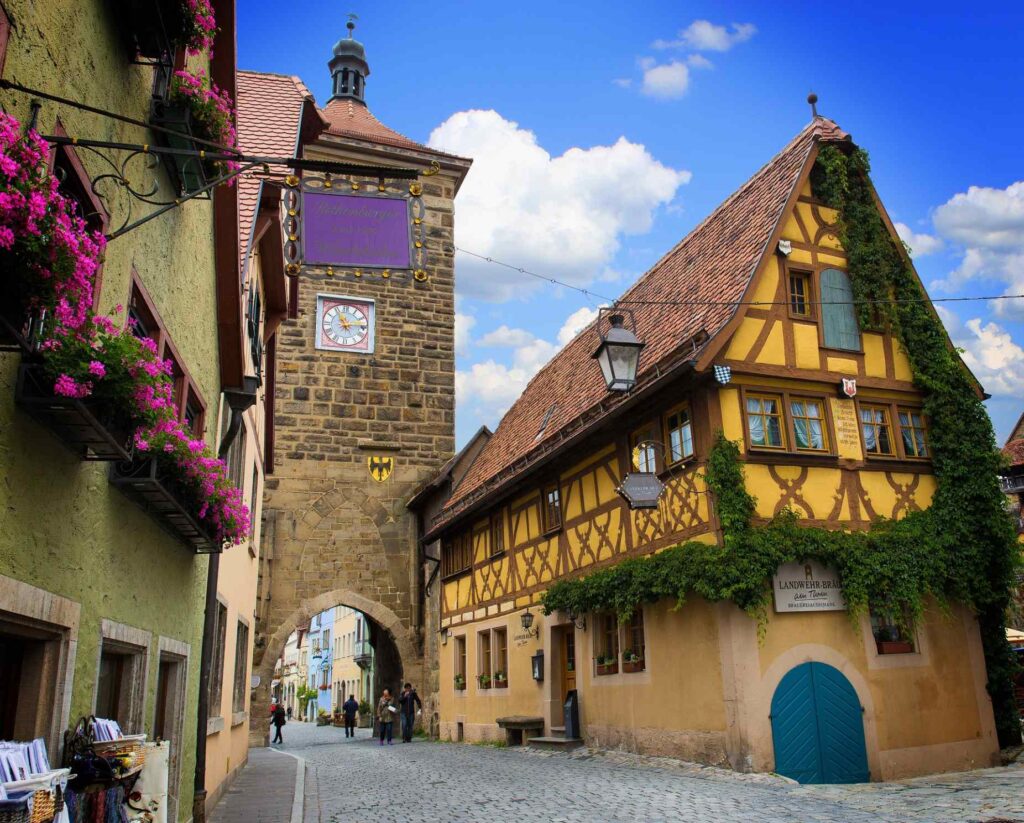
If you’ve seen a photo of the Romantic Road, there’s a good chance it was taken in Rothenburg ob der Tauber. This is the most complete medieval walled town on the entire route, with towers, gates, and half-timbered buildings that look almost untouched by time. Walking the old city wall gives you views over the rooftops that are hard to beat.
Rothenburg does get crowded, especially with day-trip bus tours from Frankfurt and Munich. Staying overnight is the best way around this, since the town empties out once the tour buses leave in the late afternoon. Early mornings here, before the crowds arrive, are genuinely magical.
Dinkelsbühl: The Overlooked Gem
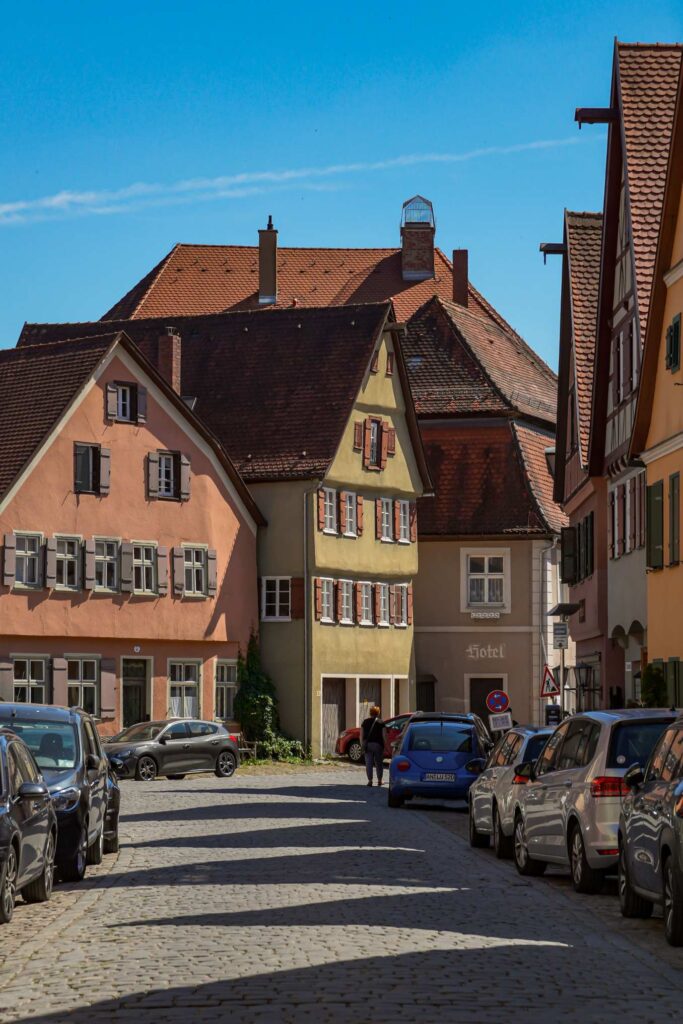
Dinkelsbühl gets a fraction of the visitors Rothenburg does, and that’s exactly its appeal. The old town walls are still fully intact, and the pastel-colored buildings feel just as photogenic without the crowds pressing in. It’s an easy stop for a few hours, or a peaceful overnight if you’d rather skip the bigger crowds elsewhere.
Nördlingen: The Town Built Inside a Meteor Crater
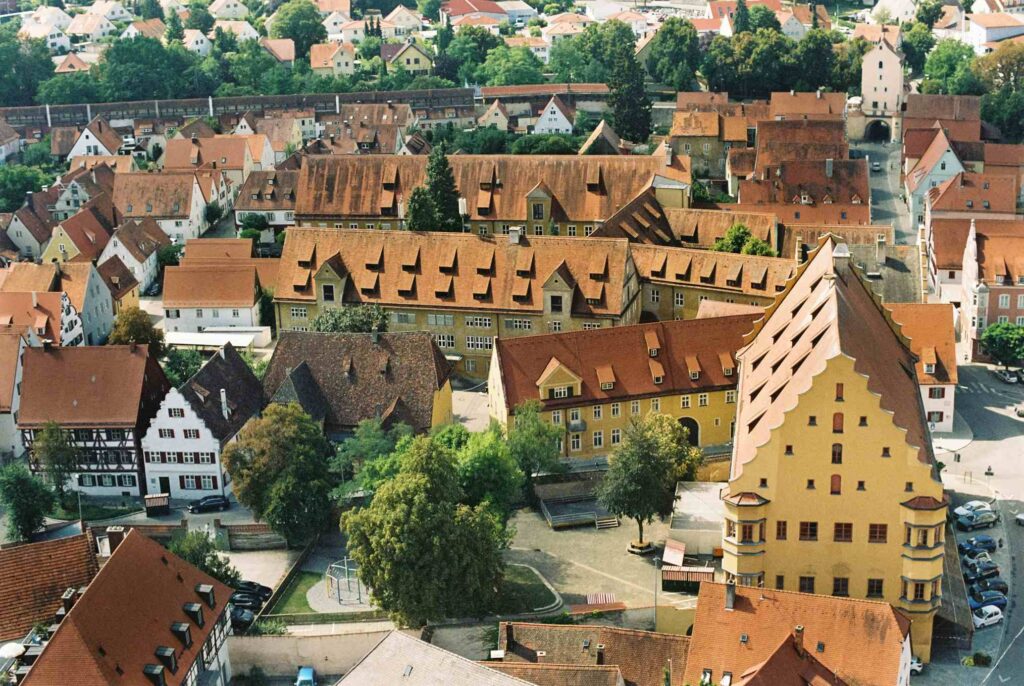
Nördlingen has one of the strangest backstories of any town on the route. It sits inside the Nördlinger Ries, a massive crater formed by a meteorite impact around 15 million years ago. You can actually see this shape from the air, since the town’s medieval walls form a near-perfect circle following the crater’s rim.
Beyond the science angle, Nördlingen has its own charming old town and a church tower you can climb for sweeping views. It’s an easy, worthwhile detour that most guidebooks barely mention.
Augsburg: A Quick Detour Worth Taking
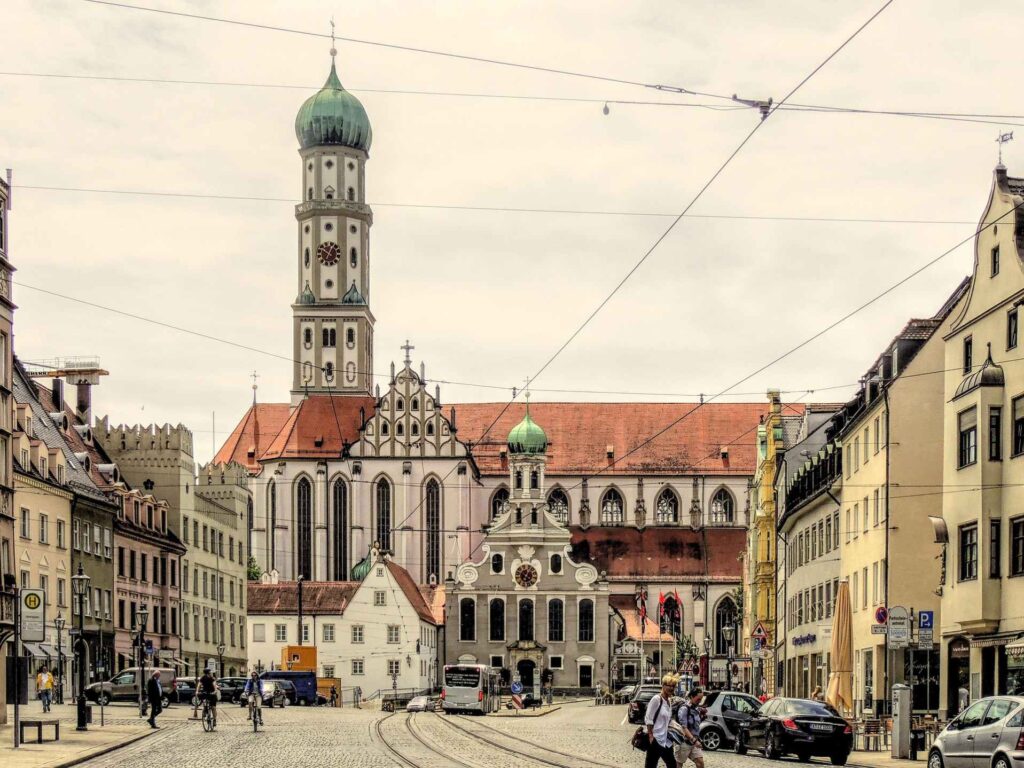
Augsburg is one of Germany’s oldest cities, and it sits just off the main Romantic Road path. It’s bigger and more modern-feeling than the smaller medieval towns, with a lively city center and some genuinely old architecture mixed in. If you’re short on time, it’s easy to skip, but it’s a good stop if you want a change of pace from small-town charm.
Füssen: Where the Route Ends, and Gateway to the Alps
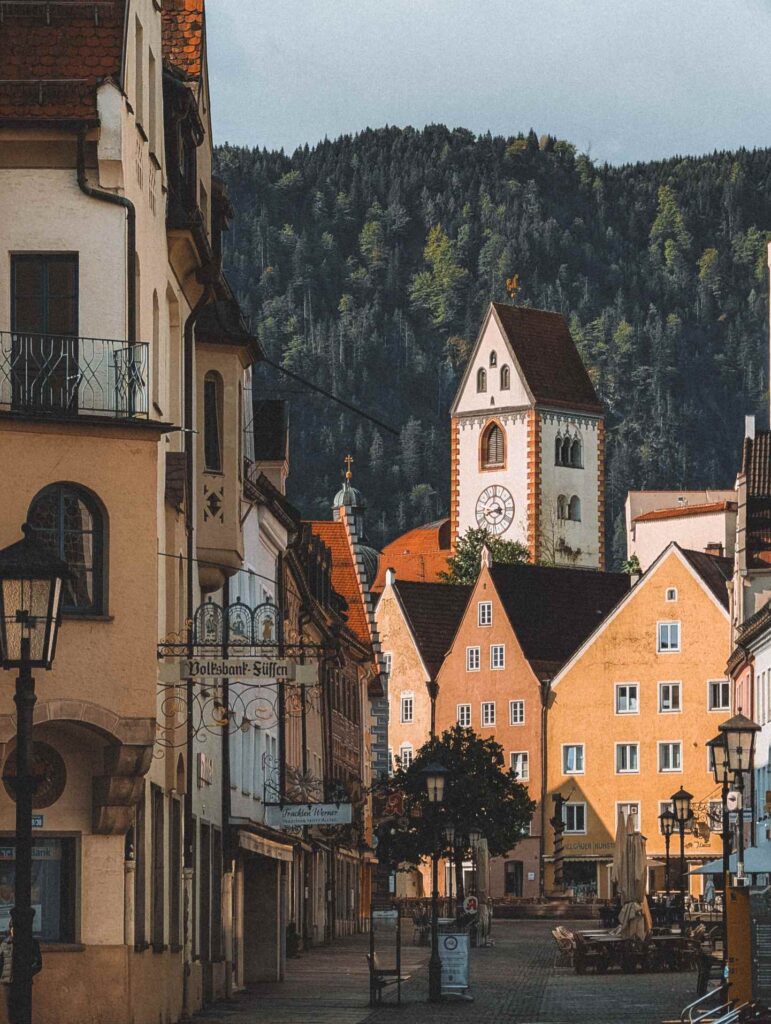
Füssen marks the end of the Romantic Road, right at the foot of the Bavarian Alps. This is your base for visiting Neuschwanstein and Hohenschwangau castles, and the mountain scenery here is a dramatic shift from the rolling countryside further north. Plan to spend at least one night here, since the castles deserve unhurried time.
Must-See Castles on the Romantic Road
Neuschwanstein Castle
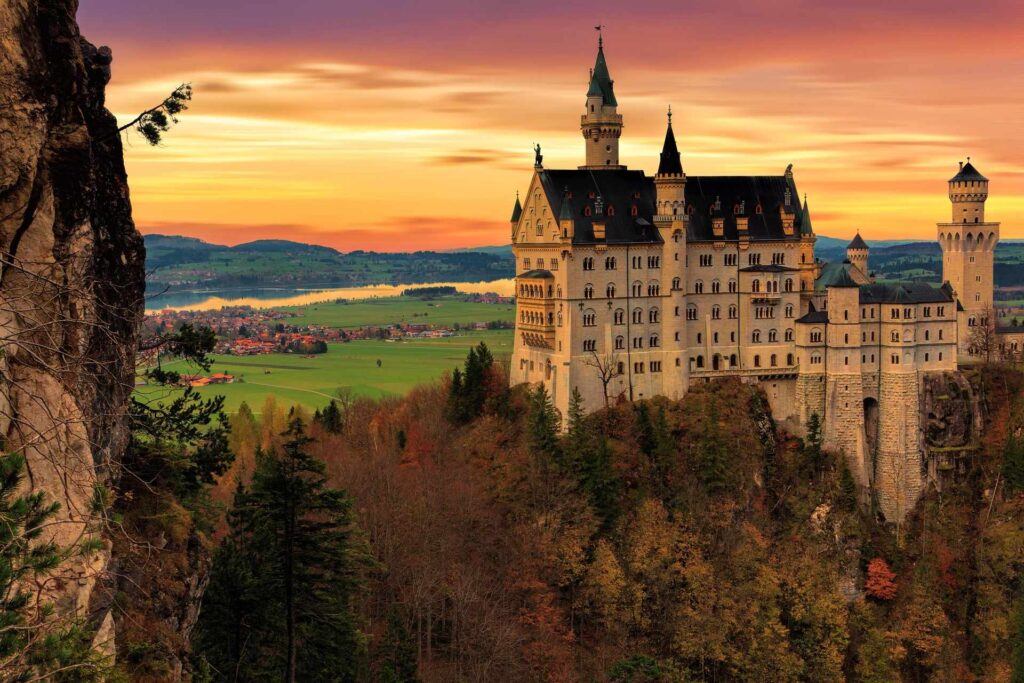
Neuschwanstein is widely said to have inspired one of Disney’s fairytale castles, and it’s easily the most photographed stop on the entire route. King Ludwig II built it in the late 1800s as a personal retreat, though he only lived there for a matter of months before his death. You can book tickets and check visiting details through the official Neuschwanstein ticket center.
The castle sits on a hill above the town, so getting there involves a walk, a horse-drawn carriage, or a shuttle bus. Tours move quickly and only cover part of the interior, but the views alone make the trip worthwhile. Book your ticket online in advance, since same-day tickets often sell out by mid-morning in peak season.
Hohenschwangau Castle
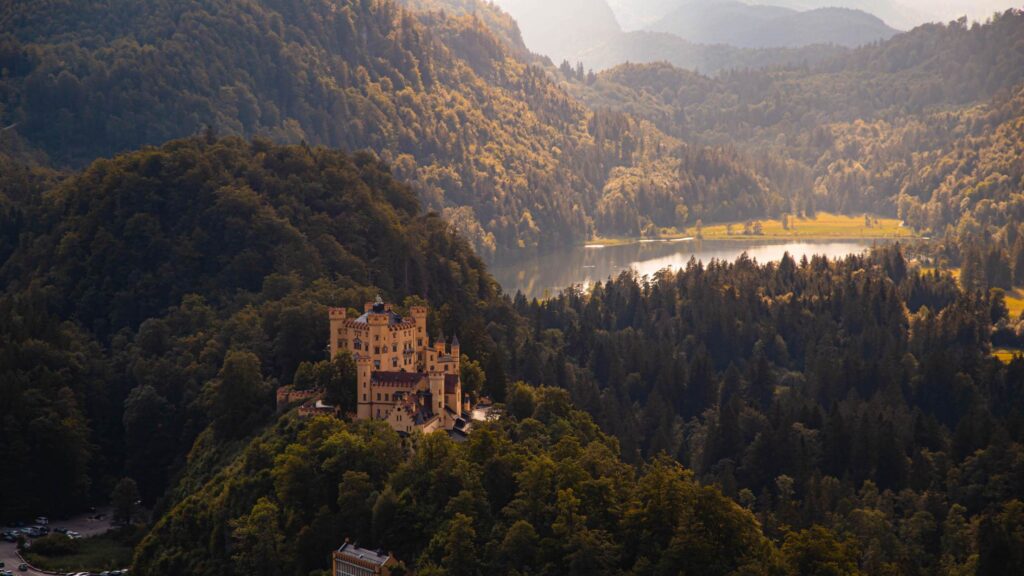
Hohenschwangau sits just across the valley from Neuschwanstein, and it’s often skipped by visitors short on time. That’s a shame, since this is actually the childhood home of King Ludwig II, and it feels more lived-in than its famous neighbor. Combining both castles in one day is possible, but it makes for a long, tiring visit.
Harburg Castle
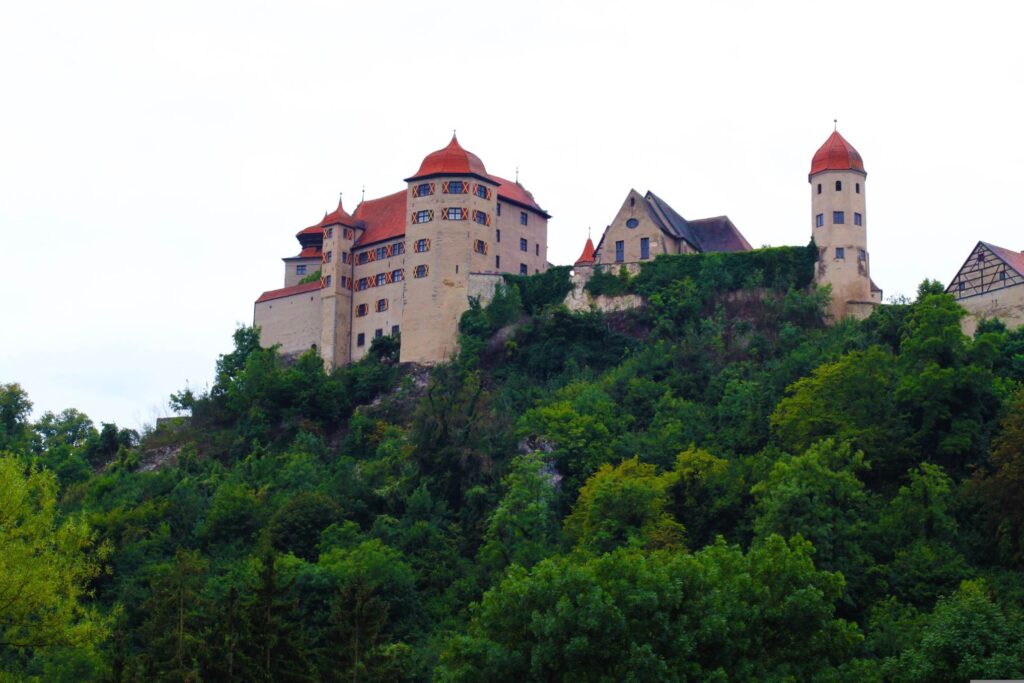
Unlike Neuschwanstein, which was built as a 19th-century fantasy palace, Harburg Castle is the real thing. It dates back to the Middle Ages and still looks the part, with thick stone walls perched above the Wörnitz River. It’s a quieter stop, and one of the best places on the route to picture what a working medieval fortress actually looked like.
Where to Stay on the Romantic Road
Best Home Bases for a Short Trip
If your time is limited, Rothenburg ob der Tauber and Füssen make the two strongest home bases. Rothenburg puts you close to the northern half of the route, while Füssen sets you up for the castles at the end. Splitting your trip between these two towns covers most of the highlights with minimal driving each day.
Staying in Small Towns vs. Bigger Cities
Small towns like Rothenburg and Dinkelsbühl offer a quieter, more atmospheric stay, especially once day-trippers clear out in the evening. Bigger stops like Würzburg and Augsburg give you more dining and nightlife options if that matters to you. Neither choice is wrong, but staying in at least one small town overnight is worth building into your plans.
Budget, Mid-Range, and Splurge Picks
Budget travelers will find plenty of guesthouses and simple hotels throughout the route, often run by local families. Mid-range travelers have the most options, with comfortable three- and four-star hotels common in every major stop. If you want to splurge, a handful of historic hotels inside old town walls, some dating back centuries themselves, let you sleep inside the same walls you spent the day exploring.
Practical Tips for Planning Your Romantic Road Trip
How to Get to the Start of the Route
Frankfurt Airport is the most common starting point for travelers beginning in Würzburg, since it’s well connected by train and rental car pickup. Munich Airport works well if you’re planning to start from the southern end near Füssen instead, or if you’re combining this trip with other stops in Bavaria. Either airport puts you within a few hours of the route by car or train.
Common Mistakes First-Time Visitors Make
The biggest mistake is trying to cram the entire route into two or three days without accepting any trade-offs. This usually means rushing through towns without actually experiencing them. Skipping advance tickets for Neuschwanstein is another common misstep, since it can mean standing in line for hours or missing out entirely.
Some travelers also stick only to the famous stops and skip smaller towns like Dinkelsbühl or Nördlingen. Those quieter towns are often where the trip starts to feel personal instead of like a checklist. Building in at least one unplanned afternoon, with no agenda at all, tends to be what people remember most fondly.
Last words on Germany’s Romantic Road
The Romantic Road earns its name honestly, even if it was a marketing team, not a poet, who came up with it. Between the medieval walls of Rothenburg ob der Tauber, the fairytale silhouette of Neuschwanstein, and the quiet charm of towns like Dinkelsbühl and Nördlingen, this route packs an incredible amount of Bavaria into one manageable trip. Whether you have three days or a full week, a well-planned Romantic Road itinerary is one of the most rewarding road trips Germany has to offer.