12 Best Places to Visit in Italy for the First Time
Planning your first trip to Italy is exciting, and it can also feel overwhelming. Everyone you know has a favorite town, a secret beach, or a restaurant you “have to” try. Before long, your wish list has 25 places on it and you only have limited days.
This guide will help you choose. Below are the 12 best places to visit in Italy for the first time – from a traveler. For each one, you’ll find what to see, how many days it needs, who it suits best, and how to get there by train. After the list, you’ll find sample routes for one or two weeks, so you can turn this list into a real trip.
Here are the 12 places at a glance:
- Rome
- Florence
- Venice
- Tuscany’s hill towns (Siena and the Val d’Orcia)
- Cinque Terre
- The Amalfi Coast
- Naples and Pompeii
- Lake Como
- Milan
- Bologna
- Verona
- Sicily
How We Picked These Must-See Places in Italy
A first trip is different from a fifth trip. You want the famous sights, but you also want a trip that’s easy to plan and doesn’t wear you out. So every place on this list had to pass a few simple tests.
First, it had to be easy to reach by train or with one short transfer. Second, it had to be worth it on a first visit, not just a nice extra for people who have seen everything else. Third, together the places had to give you a real mix of big cities, coast, countryside and food.
You won’t see all 12 places in one trip, and you shouldn’t try. Pick a few that excite you most, and use the routes further down to connect them.
The 12 Best Places to Visit in Italy for the First Time
1. Rome: The Obvious Start
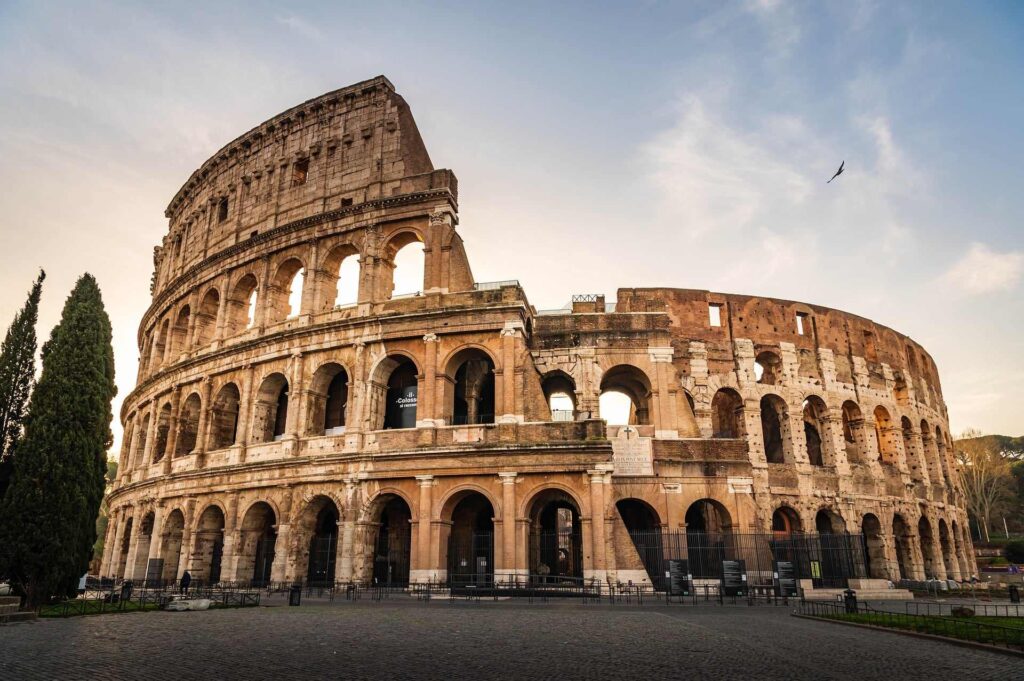
Rome is where most first trips to Italy start, and honestly, I wouldn’t have it any other way. It’s the country’s biggest gateway, so flights are easy to find from almost anywhere. More importantly, it squeezes more history into a few square miles than just about any city on Earth. Where else can you stand in the arena where gladiators fought, then sit down to a plate of carbonara on a quiet little square an hour later?
My advice is to start with the big one: the Colosseum and the Roman Forum, which share one ticket. Book a timed entry on the official Colosseum website before you leave home, because walk-up tickets sell out fast. Then set aside half a day for the Vatican Museums, the Sistine Chapel and St. Peter’s Basilica. These are three of the busiest sights in Europe, and having a set entry time will save you hours (and a lot of frustration!).
Keep your evenings free for wandering, because that’s when Rome is at its best. Toss a coin into the Trevi Fountain, step inside the Pantheon, and then stroll across the river to Trastevere. Its cobbled lanes, ivy-covered walls and tiny trattorias are where the city finally slows down. Grab a table outside, order something to drink, and just watch Roman life go by.
How many days: 3 days. Best for: history lovers and anyone who wants the “classic” Italy. Getting there: Rome Fiumicino (FCO) airport, then the Leonardo Express train to Roma Termini in about 32 minutes.
Insider tip: The Vatican Museums are free on the last Sunday of each month, but you can’t book ahead, and people start queuing before 7 am.
2. Florence: Renaissance Art in a Walkable City
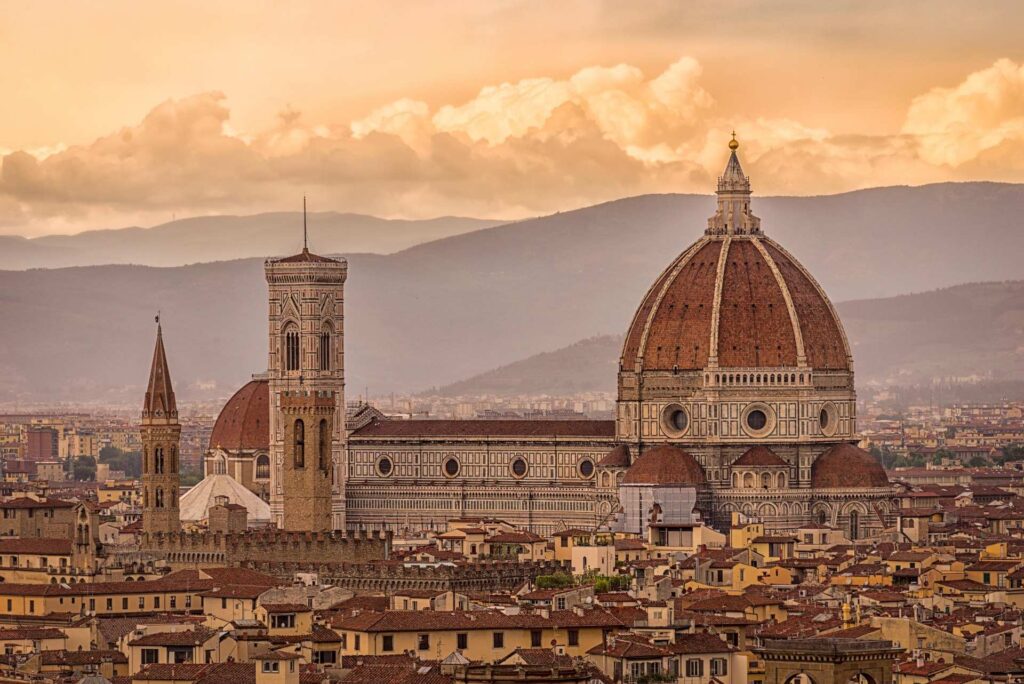
After the rush of Rome, Florence feels like a deep breath. It’s small enough to walk almost everywhere, and you’ll find a church, a palace or a famous painting around nearly every corner. This is where the Renaissance was born, and walking its streets still feels a bit like strolling through an open-air museum.
Art lovers, get ready! The Uffizi Gallery is home to Botticelli’s Birth of Venus and room after room of masterpieces. Over at the Accademia, Michelangelo’s David is waiting, and trust me, photos don’t prepare you for how big and striking he is in person. Then there’s the Duomo, the cathedral with that famous red dome. If your legs are up for it, climb the 463 steps to the top for one of the best views in all of Italy.
When evening comes, head up to Piazzale Michelangelo and watch the sun set over a sea of terracotta rooftops. It’s one of those moments you’ll remember long after the trip. The next day, cross the Ponte Vecchio into the Oltrarno neighborhood. This is where Florence feels more local, with leather workers, bookbinders and cozy bars tucked away from the crowds.
How many days: 2 to 3 days. Best for: art lovers, first-timers who want a slower pace. Getting there: about 1 hour 30 minutes from Rome by high-speed train.
Insider tip: Tickets for the Duomo dome climb come with a fixed time slot and sell out weeks ahead in spring and summer. Book them as soon as your dates are set.
3. Venice
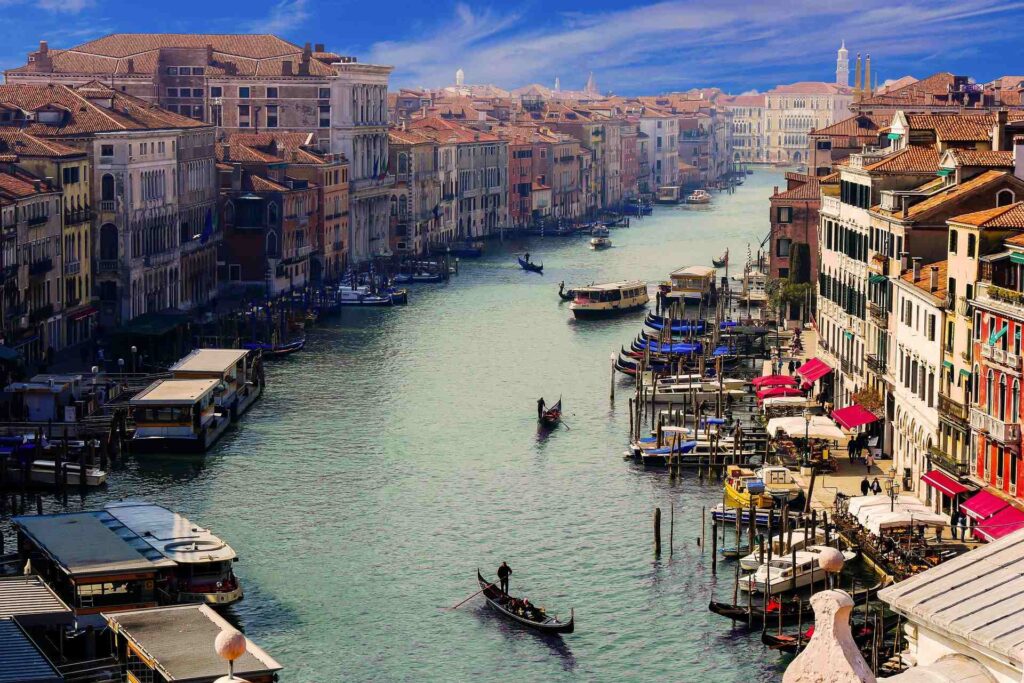
Honestly, there’s nowhere else in the world quite like Venice. Canals take the place of roads, and boats do the job of buses and taxis. The moment you walk out of the train station and see the Grand Canal for the first time, you’ll probably find yourself grinning. It’s that kind of place.
For the best first look at the city, hop on vaporetto (water bus) line 1 and ride it down the Grand Canal. It’s cheap, it’s slow, and it’s easily one of the most beautiful rides you’ll ever take. Next, step inside St. Mark’s Basilica to see its glittering gold mosaics, then visit the Doge’s Palace right next door. After that, do yourself a favor and put the map away. Getting lost in quieter areas like Cannaregio or Castello is where Venice really wins you over.
Got an extra half day? Do like me, and take the boat out to Burano. Its rainbow-colored houses and little lace shops feel like a different world from the crowds around St. Mark’s. It’s the perfect way to slow down before heading back into the city.
How many days: 2 days, with at least one night. Best for: couples and photographers. Getting there: about 2 hours from Florence by high-speed train to Venezia Santa Lucia station.
Insider tip: Stay the night. Most visitors are day-trippers who leave by late afternoon, and Venice feels calm and magical after they go. Day visitors also pay an access fee on peak days. Hotel guests are exempt, though you still need to register. Check the current dates on the official access fee page (UPDATE: the access fee is no longer in effect!).
4. Tuscany’s Hill Towns: Siena and the Val d’Orcia
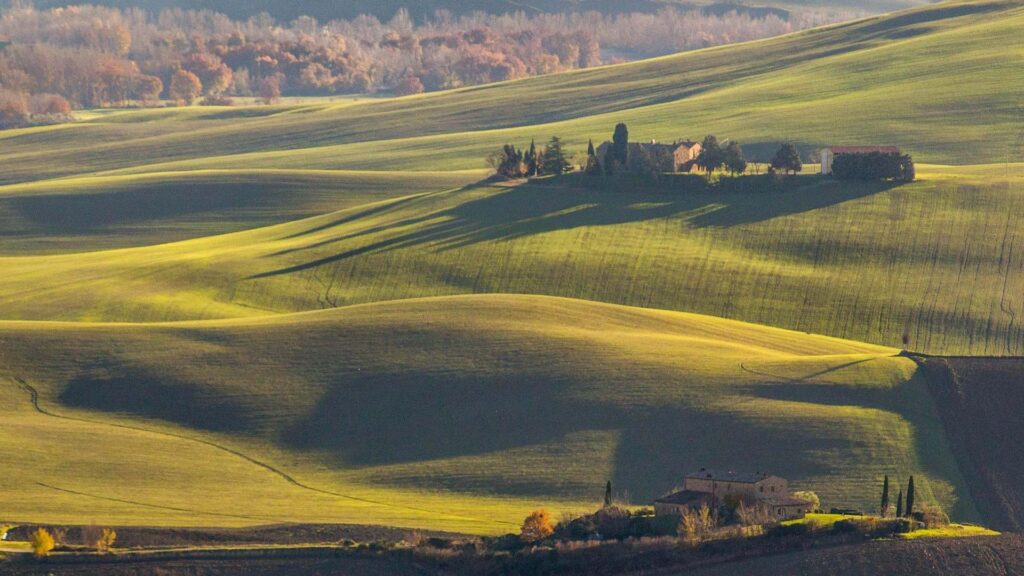
Good news: those rolling hills, cypress-lined roads and old stone farmhouses you’ve seen on postcards really do exist. You’ll find them in southern Tuscany, just an hour or two from Florence.
Kick things off in Siena, a medieval city built around Piazza del Campo, a huge square shaped like a seashell. Twice a year, on July 2 and August 16, the square turns into a racetrack for the Palio, a wild bareback horse race that the whole city goes crazy for. From Siena, drive south into the Val d’Orcia, a valley so beautiful it’s protected as a UNESCO World Heritage Site. Stop in Pienza to taste its famous pecorino cheese!
If there’s one thing I’d tell you not to skip, it’s a long, lazy lunch at a winery. Picture homemade pasta, local drink and a view of vineyards stretching to the horizon. Just remember to book ahead, since many small family wineries only welcome visitors with a reservation.
How many days: 2 to 3 days. Best for: food lovers, couples, anyone needing a rest from cities. Getting there: about 1 hour 15 minutes by bus from Florence to Siena. For the Val d’Orcia, a rental car makes life much easier.
Insider tip: Tuscany is the one place on this list where a car is worth it. Just don’t drive into any town center, as explained in the “Getting Around” section below.
5. Cinque Terre: Five Villages on the Ligurian Coast
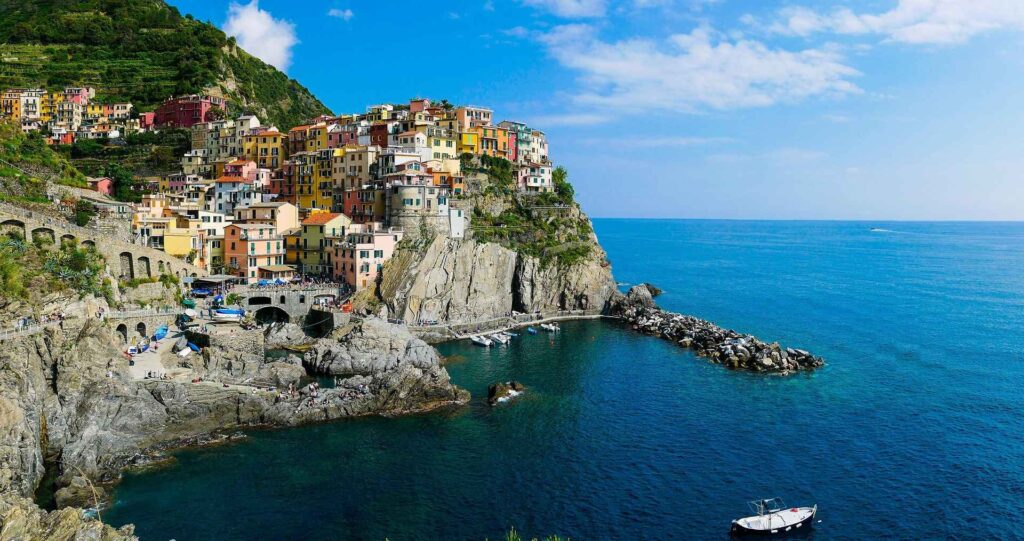
Cinque Terre means “Five Lands,” and once you see it, you’ll understand why it’s on so many bucket lists. Picture five brightly painted fishing villages clinging to the cliffs above a sparkling blue sea. They’re Monterosso, Vernazza, Corniglia, Manarola and Riomaggiore, and each one has its own personality. Best of all, a little local train connects them, so you can hop from village to village in just a few minutes.
If you ask me, though, the best way to experience Cinque Terre is on foot or even a Vespa (scooter). The Sentiero Azzurro (the “Blue Trail”) winds along the coast between the villages, with sea views around nearly every bend. Right now, the section from Corniglia to Manarola is closed after a landslide, but you can take a higher detour through the tiny village of Volastra instead. The famous Via dell’Amore, a flat 1 km stroll from Riomaggiore to Manarola, has reopened and runs one way only. You’ll need a Cinque Terre Card for the main paths, so check the latest trail updates on the Cinque Terre National Park website before you lace up your shoes.
Whatever you do, save time for the view of Manarola from the path just outside the village. Come at sunset, when the houses glow orange and pink above the water, and have your camera ready. For another postcard-perfect shot, head to Vernazza’s tiny harbor, where colorful boats bob in front of the pastel houses.
How many days: 1 to 2 days. Best for: hikers, photographers, travelers on a budget. Getting there: by train to La Spezia (about 2 to 2.5 hours from Florence, direct or with a change in Pisa), then the local Cinque Terre train.
Insider tip: Hotels inside the villages are small and expensive. Stay in La Spezia or Levanto instead. Both are a short train ride away and much cheaper.
6. The Amalfi Coast: Italy’s Most Famous Coastline
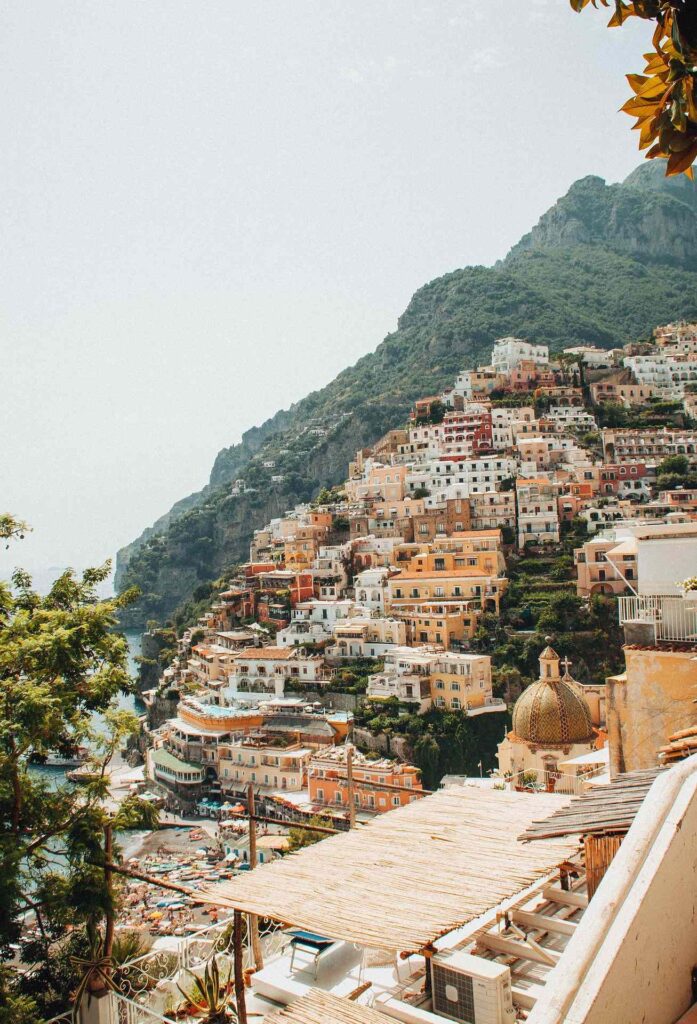
The first time you drive the Amalfi Coast, you’ll understand why people rave about it. The road twists along the cliffs so tightly that the bus drivers honk before every blind bend, and every curve opens up a new view. Pastel houses spill down toward water so blue it barely looks real. Lemon groves are terraced into the hills, and in some spots you can actually smell them through the window.
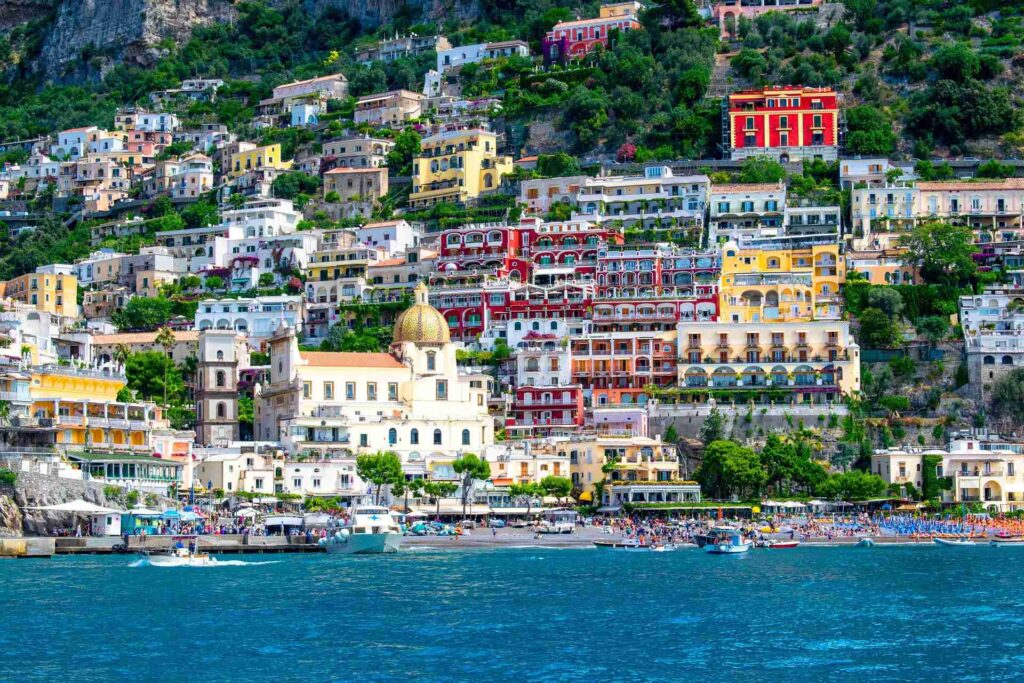
Positano is the one everyone pictures, and it really does look like the postcards. What the postcards don’t show you are the stairs. The whole town is built straight up the cliff, so getting anywhere means steps, steps and more steps. It’s all downhill on the way to the beach, and your legs only find out the truth on the climb back up. Still, sitting on the beach with a cold drink, looking up at the colorful houses and the tiled dome of the church, you’ll decide every step was worth it.
Amalfi town is livelier, with a grand cathedral at the top of a steep staircase and a main square that’s made for people-watching. My favorite surprise, though, was Ravello, perched high in the hills above the coast. Take the 10-15 minute walk from the main square to Villa Cimbrone and head straight for the Terrace of Infinity. It’s lined with old marble busts, and the view stretches over the Gulf of Salerno until the sea and sky blend together. Go right when it opens at 9 am, and you might get the terrace almost to yourself.
For me, the highlight of the whole coast is the Path of the Gods. Take the bus up from Amalfi to the village of Bomerano and start walking. The trail runs mostly downhill for about three hours, with the colorful domes of Praiano and Positano far below and the island of Capri out on the horizon. When you reach the tiny village of Nocelle, stop at the little lemon stand for something ice-cold. Then comes the final challenge: roughly 1,700 stone steps down into Positano. Your knees will complain, but your camera roll will thank you 😉
How many days: 2 to 3 days. Best for: couples, honeymooners, beach lovers. Getting there: by train from Rome to Naples or Salerno, then ferry or bus along the coast.
Insider tip: In summer, the coastal buses are packed and the road is often jammed. Ferries between Salerno, Amalfi and Positano are faster, calmer and far more scenic.
7. Naples and Pompeii: History and the Best Pizza
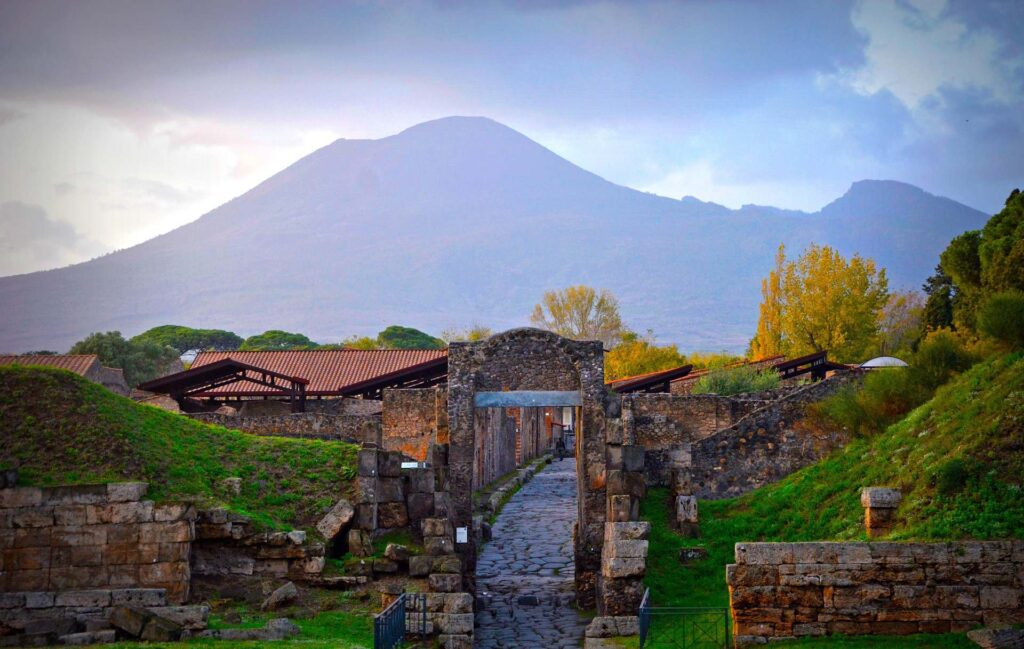
Naples hits you the second you step out of the station. Scooters buzz past with inches to spare, laundry flaps on lines strung between the balconies, and everyone seems to be talking at once. It’s loud, a little messy, and completely full of life. Plenty of first-timers skip Naples, and honestly, I think they’re missing one of Italy’s most unforgettable cities. It’s the birthplace of pizza, and it’s also the perfect base for a day at Pompeii.
Pompeii is the Roman city buried by Mount Vesuvius in 79 AD, and walking through it feels like stepping back in time. You can still see deep grooves worn into the stone streets by chariot wheels, and the big stepping stones Romans used to cross without getting their feet dirty. Peek into the old bakeries with their stone ovens and the street-side “fast food” counters where hot food was once served – the beauty! Then stand in the Forum, with Vesuvius looming right behind it, and let that sink in. Tickets are now timed and named, so book yours online through the official Pompeii website before you go.
If crowds aren’t your thing, Herculaneum might be the better choice. It’s much smaller and quieter than Pompeii, and in many ways it’s even better preserved. You’ll see second floors still standing, colorful wall paintings, and wooden beams turned black by the heat of the eruption. The most moving part is down by the old shoreline, where around 300 people sheltered in stone boathouses. Their skeletons are still there, and it’s a sight that stays with you.
Back in Naples, spend an afternoon wandering Spaccanapoli, the long, narrow street that slices straight through the historic center. Don’t miss the side street of San Gregorio Armeno, lined with workshops selling handmade nativity figures all year round. Then it’s pizza time. Queue up at a classic spot like Sorbillo or L’Antica Pizzeria da Michele, where you take a number and wait for it to be called out in Italian. A real Neapolitan margherita costs just a few euros, and it’s soft and a little soupy in the middle, so grab a knife and fork or fold it in half like the locals do. It might just be the best pizza you’ll ever eat.
How many days: 1 to 2 days. Best for: history lovers and foodies. Getting there: about 1 hour 10 minutes from Rome by high-speed train.
Insider tip: Pompeii has very little shade. Bring water and a hat, and go early in the morning in summer.
8. Lake Como: Villas, Ferries and Mountain Views
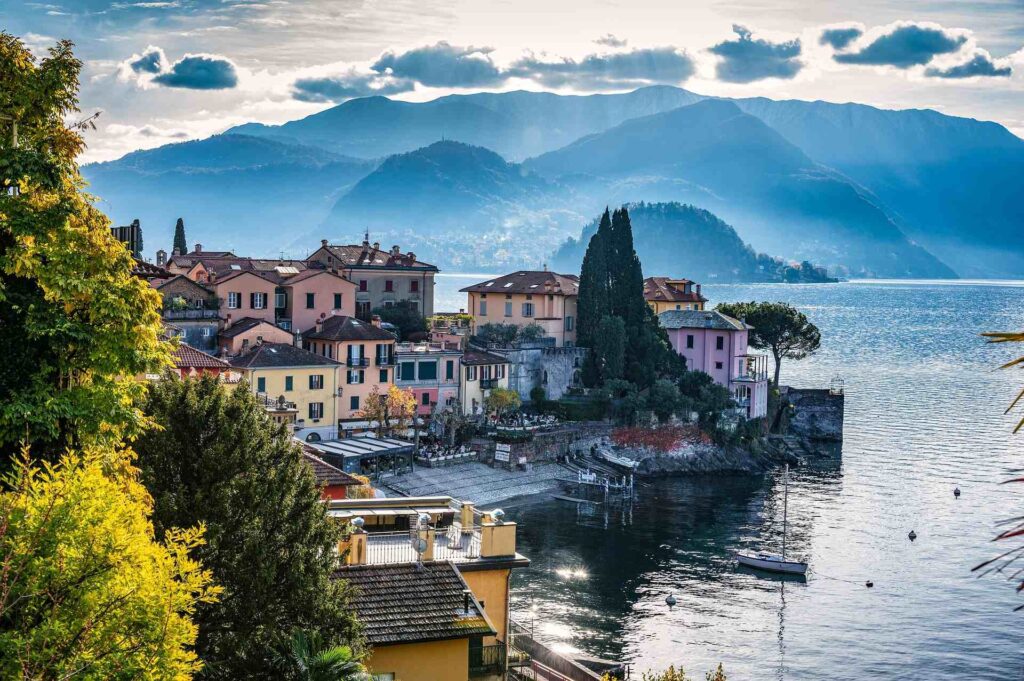
After the crowds and noise of Italy’s big cities, Lake Como feels like someone turned the volume down. Mountains rise straight out of deep blue water, and grand old villas with manicured gardens line the shore. It’s elegant, but in a relaxed, lazy-afternoon kind of way.
I’d base myself in Varenna. The train from Milan drops you right in the village in about an hour. Take an evening stroll along the Passeggiata degli Innamorati, the “Lovers’ Walk,” a little path that hugs the water past colorful houses and waterside cafés. If you’re up for a climb, the 30-minute uphill walk to Castello di Vezio, a medieval castle above the village, rewards you with one of the best views over the lake.
The real magic of Lake Como, though, is the ferry. From Varenna it’s a 15- to 20-minute ride to Bellagio, often called the “Pearl of the Lake.” It sits right at the point where the lake splits into its two southern arms. Wander its steep, stepped cobbled lanes lined with little shops, then grab a gelato and find a bench by the water. Watching the boats glide past with the mountains behind them is a perfect way to spend an afternoon.
Save at least half a day for Villa del Balbianello, the lake’s most famous villa. Its terraced gardens sit on a green point jutting into the water, and you might recognize them from Star Wars and Casino Royale. Take the ferry to Lenno, then either walk the flat 20-minute path or hop on the little shuttle boat. Book your ticket online ahead of time, and remember that the villa is closed on Mondays and Wednesdays.
For more ideas, see our full guide to Lake Como Travel Tips.
How many days: 1 to 2 days. Best for: couples and slow travelers. Getting there: about 1 hour by regional train from Milan to Varenna.
Insider tip: Ferries are the best way around the lake. If you plan to visit several villages in one day, ask at the ticket office about a day pass. It can work out cheaper than buying single tickets.
9. Milan: Fashion, the Duomo and The Last Supper
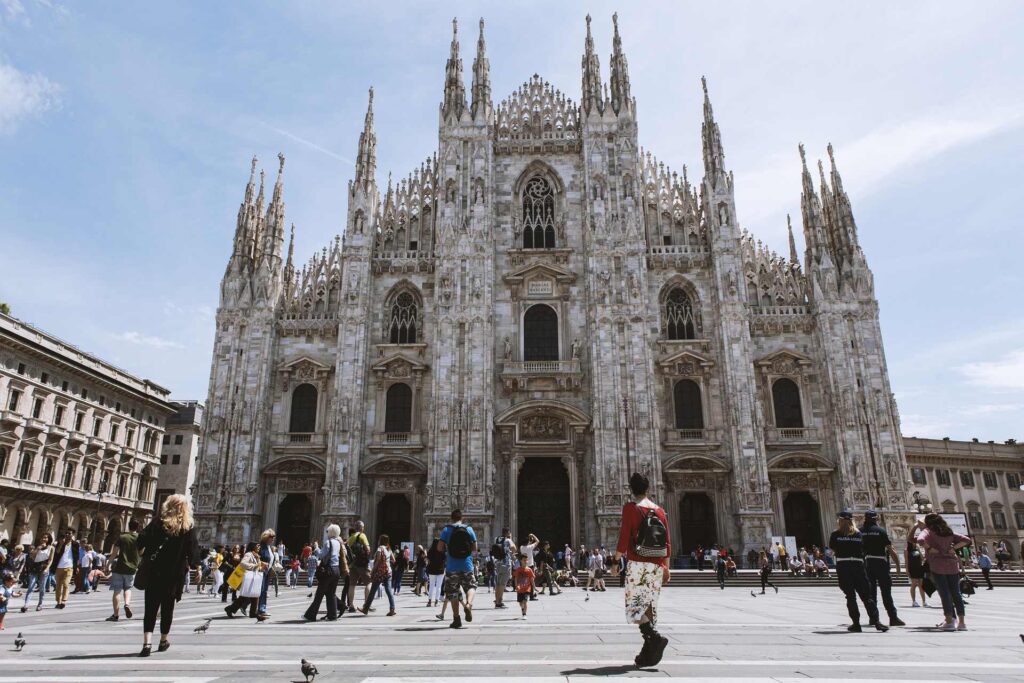
A lot of people treat Milan as just a place to land or catch a flight home. I get it, but give it at least one day. Italy’s business and fashion capital is sleeker and more modern than Rome or Florence, with designer boutiques, busy trams and stylish locals dashing between meetings. Because so many international flights come and go from here, it makes a handy first or last stop on your trip.
Start at the Duomo, and don’t stop at the inside. Buy a ticket for the rooftop terraces and take the lift, or climb the 251 steps if you’re feeling energetic. Up top, you’ll wander across the marble roof among a forest of 135 spires and thousands of carved statues and gargoyles. High above them all stands the Madonnina, the golden statue of the Virgin Mary that has become the symbol of Milan. On a clear day, you can even spot the snowy Alps on the horizon. Cover your shoulders and knees, as the dress code applies to the terraces too.
Right next door is the Galleria Vittorio Emanuele II, a grand 19th-century shopping arcade under a soaring glass dome. Look down at the floor mosaics and find the little bull. Local tradition says spinning three times on your heel on it brings good luck, so join the queue of visitors doing a clumsy twirl. Then make your way to the church of Santa Maria delle Grazie to see Leonardo da Vinci’s The Last Supper. Visits last only 15 minutes, with small groups let in at a time, and tickets go on sale in batches every three months. Book as soon as your dates are set, because they sell out fast.
When evening comes, do as the Milanese do and head to the Navigli, the old canal district, for aperitivo. From about 6 pm, the bars along the Naviglio Grande fill up with people sipping spritzes by the water. Order a drink, and you’ll often get a plate of snacks (or even a whole buffet) with it. Before you sit down, take a peek down the Vicolo dei Lavandai, a tiny lane where women once scrubbed laundry on stone washboards along the canal.
How many days: 1 day. Best for: fashion and design fans, and anyone flying into northern Italy. Getting there: Milan Malpensa or Linate airports, or about 2 hours by high-speed train from Florence.
Insider tip: Milan isn’t a must for everyone. If you’re short on time, use it as your gateway and spend your days at Lake Como or Verona instead.
10. Bologna: Italy’s Food Capital
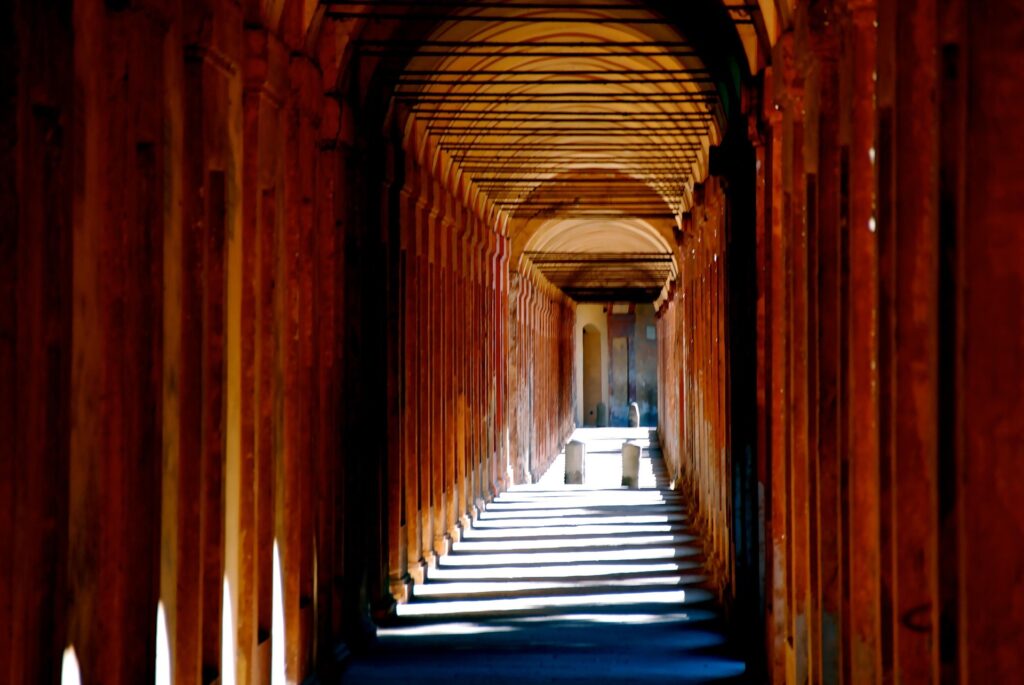
Bologna doesn’t get the same attention as Florence or Venice, and that’s part of its charm. It’s a real working city with a big university and very few tour groups. It’s also where many Italians say the country’s best food comes from.
This is the home of tagliatelle al ragù, the dish the rest of the world calls “Bolognese.” It’s also the place for fresh tortellini, mortadella, and Parmigiano Reggiano from nearby farms. A food tour or a morning in the Quadrilatero market streets is the best way to taste it all.
Bologna is also famous for its porticoes, the covered walkways that run for miles through the city. They’re a UNESCO World Heritage Site, and they keep you dry in the rain. The city’s leaning Two Towers are another landmark. Both have been closed since 2023 while engineers stabilize the Garisenda tower, so you can only admire them from the street. For a view over Bologna’s red rooftops, climb the clock tower (Torre dell’Orologio) on Piazza Maggiore instead.
How many days: 1 to 2 days. Best for: food lovers and travelers who want fewer crowds. Getting there: about 35 minutes from Florence by high-speed train.
Insider tip: Bologna makes a great day trip from Florence. It’s also a cheaper base than Florence if you want to visit both.
11. Verona: Romance and Roman History
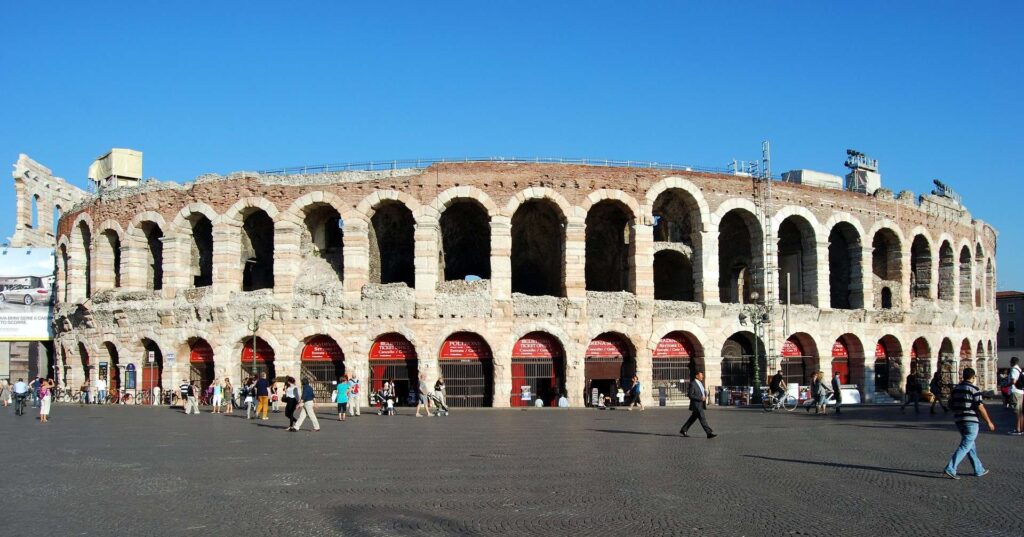
Verona is the setting for Shakespeare’s Romeo and Juliet. It’s small, pretty and easy to see in a day. It sits right between Milan and Venice, so it fits neatly into a northern route.
The city’s Roman arena is one of the best preserved in the world. In summer, it hosts an opera festival under the stars, which is a truly special night out. Visit Piazza delle Erbe for its market and painted buildings, then climb up to Castel San Pietro for a view over the rooftops and the river.
Juliet’s House is very popular, but the balcony was added in the 20th century. See it quickly, then move on.
How many days: 1 day. Best for: couples and opera fans. Getting there: about 1 hour from Venice or 1 hour 15 minutes from Milan by train.
Insider tip: If you’re traveling between Milan and Venice, stop in Verona for the day and leave your bags at the station.
12. Sicily: For a Longer First Trip
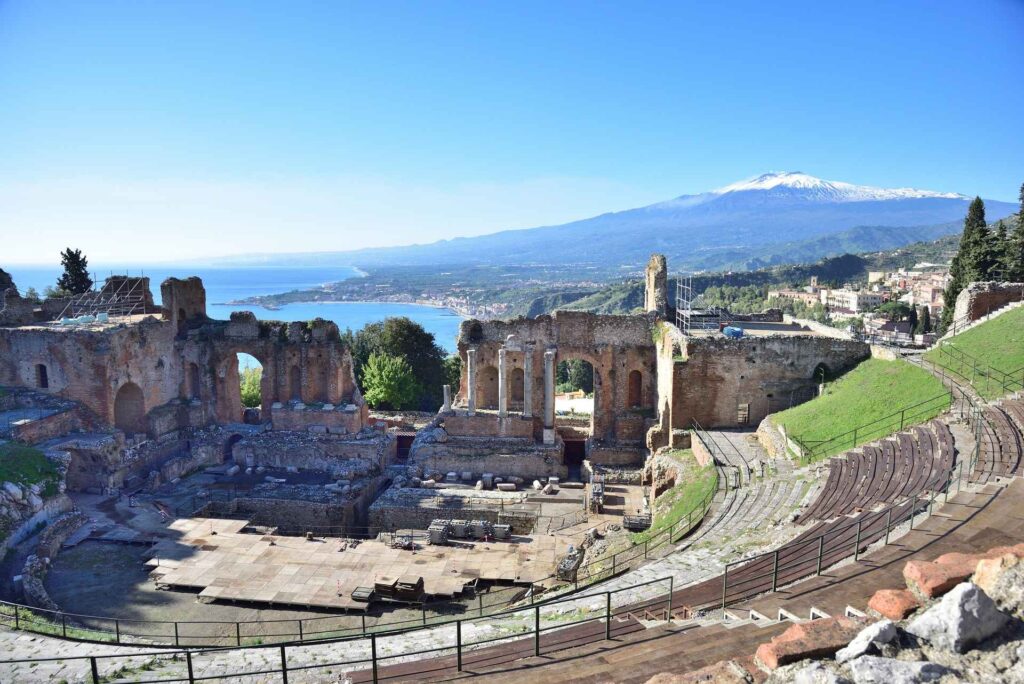
Italy’s largest island has its own food, its own dialect and thousands of years of history left behind by Greeks, Arabs and Normans. The landscapes are wilder too, with lemon groves, black lava fields and golden temples. It’s a wonderful choice if you have two weeks, but don’t try to squeeze it into a couple of days. Sicily deserves time.
Start in Taormina, a pretty hilltop town perched high above the sea. Head straight for the ancient Greek theater, where the view stretches from the Mediterranean all the way to smoking Mount Etna. Go early in the morning, before the tour groups and the midday heat arrive. Afterwards, stroll along Corso Umberto, the main street, and order a granita topped with whipped cream, served with a soft brioche bun for dunking. That’s a real Sicilian breakfast. If you fancy a swim, take the cable car down to the beach at Isola Bella, a tiny island joined to the shore by a thin strip of pebbles.
Next comes Mount Etna itself, one of the most active volcanoes on Earth. Most visits start at Rifugio Sapienza, about 1,900 meters up, where you can wander around the old Silvestri craters on your own. From there, a cable car and 4×4 buses carry you higher into a moonscape of black lava and steaming ground. Pack warm layers and proper hiking shoes, even in summer, because it gets cold and windy up there. If you want to go above 2,800 meters, you’ll need an official guide.
In Palermo, go hungry to Ballarò market. It’s loud, crowded and full of life, with vendors singing out their prices in a centuries-old style of calling called abbanniata. Grab a hot arancina (fried rice ball) and a sesame roll stuffed with panelle, crispy chickpea fritters. Braver eaters can try pani ca meusa, the city’s famous spleen sandwich. Most snacks cost just a couple of euros, so you can taste your way through the whole market.
Finally, save a day for Agrigento and the Valley of the Temples, home to some of the best Greek ruins outside Greece. The Temple of Concordia is one of the best-preserved Greek temples in the world, and seeing it glow golden in the late afternoon light is unforgettable. There’s almost no shade, so avoid the hottest hours and bring plenty of water. In summer, the park stays open late into the evening, when the temples are lit up after dark.
For a full route, see our Ultimate Sicily Itinerary, with plans for 7, 10 and 14 days.
How many days: 4 days or more. Best for: travelers with two weeks, and anyone returning to Italy soon. Getting there: a short flight from Rome, Milan or Naples to Catania or Palermo.
Insider tip: Rent a car in Sicily. Trains are slow and don’t reach many of the best places.
How to Combine These Places on Your First Trip to Italy
A list of 12 places is only helpful if you can turn it into a real trip. Here are three simple routes that work well for first-timers. Each one uses fast trains and keeps packing and unpacking to a minimum.
7 Days in Italy: Rome, Florence and Venice
This is the classic first trip to Italy, and it’s popular for good reason. Spend three nights in Rome, two in Florence and two in Venice. Each leg is a single train ride of about two hours or less.
Fly into Rome and out of Venice to avoid backtracking. Most airline sites let you book this as a “multi-city” trip. If you have energy for one day trip, Bologna is an easy half day from Florence.
10 Days in Italy: Add Tuscany or the Coast
With ten days, you can add one slower stop to the Rome–Florence–Venice route. You have two good choices.
For countryside, add two or three nights in Siena or the Val d’Orcia after Florence. For the coast, add two nights in Cinque Terre between Florence and Venice, or go south from Rome to the Amalfi Coast for three nights. Either option gives your trip a nice change of pace.
14 Days in Italy: North to South
Two weeks lets you see the full range of the country. Try this order: Venice (2 nights), Florence (3), Tuscany (2), Rome (3), and Naples plus the Amalfi Coast (4).
Fly into Venice and out of Naples. Every step is a short train ride, except the final hop to the coast by ferry or bus. If you’d rather swap the Amalfi Coast for Sicily, fly from Rome to Catania instead.
Planning Your First Trip to Italy
The best places to visit in Italy for the first time are the ones that fit your time and your travel style. For most people, that means starting with Rome, Florence and Venice, then adding one slower stop on the coast or in the countryside. Don’t try to see everything. Italy will still be there for your next trip, and most people come back.
Pick your places, book your trains and key tickets early, and leave space in each day to wander. Some of your best memories will come from the long lunches and quiet streets you never planned.
Looking for a place to stay? Our guide to Affordable Hotels in Italy That Deliver Luxury on a Budget has good picks in several of these cities.